Pug Life #005
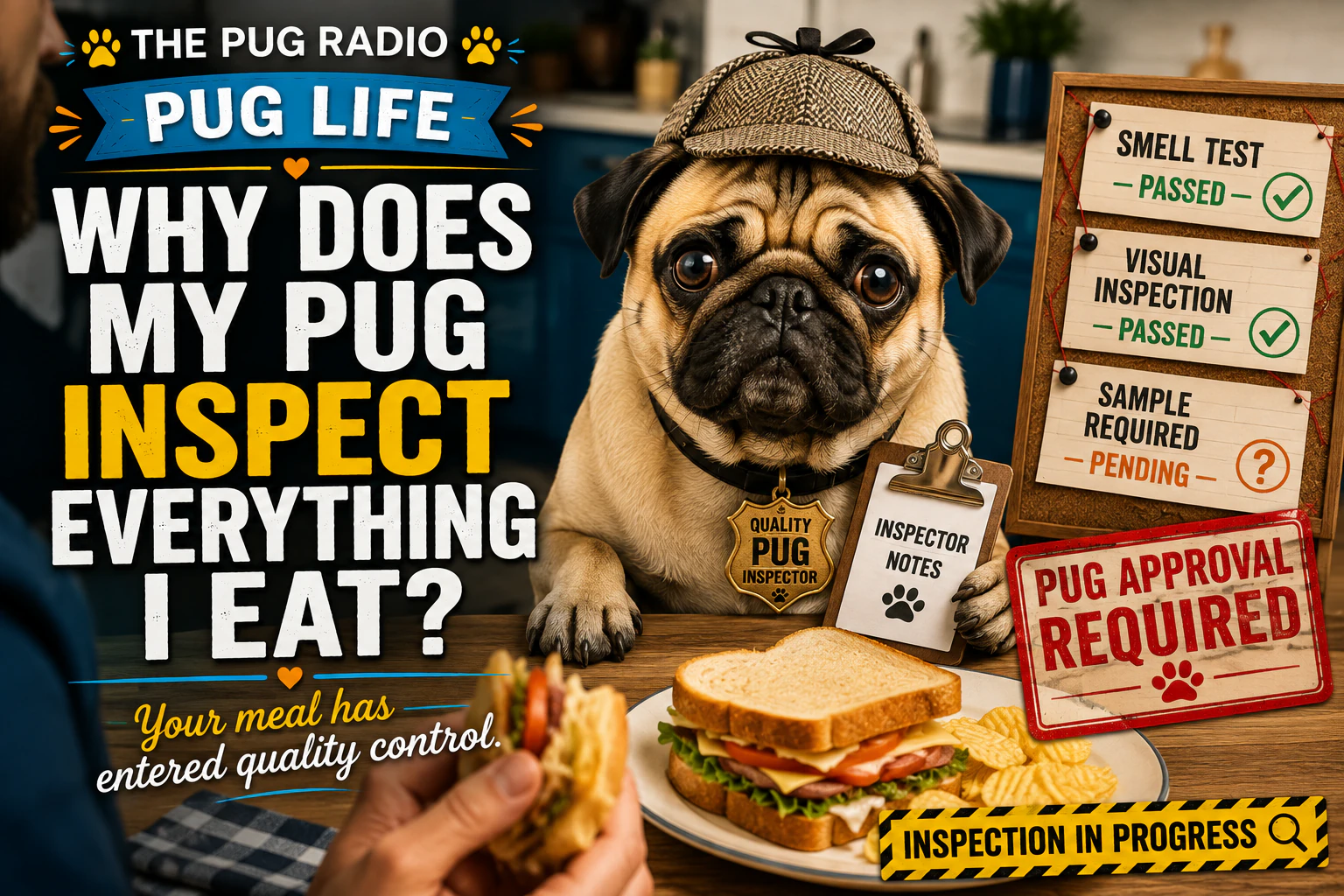
Why Does My Pug Inspect Everything I Eat?
Your meal has entered quality control.
Editorial artwork by The Pug Radio
Your Meal Is Being Audited
You can open a refrigerator quietly, unwrap something in another room, and attempt to eat a sandwich without announcing it. Somehow, the Pug knows. No paperwork was filed, no appointment was scheduled, but your lunch is now under official Pug review.
Why are dogs - and many Pugs - so interested in what their people are eating?
First: Food Is Interesting
Food contains odors, textures, movement, sounds, and learned associations. Dogs do not need a complicated reason to investigate something that smells edible. The Pug is not literally performing quality control; the dog is gathering information about something potentially rewarding.
That Nose Knows More Than You Think
Dogs possess an extraordinarily sensitive olfactory system, allowing them to detect and distinguish odors far beyond normal human ability. A meal that smells ordinary to us can provide a great deal of sensory information to a dog. There is no need to rely on a dramatic viral statistic to appreciate that difference.
The Sound of Opportunity
A refrigerator opening, food packaging, a can, plates on a table, a microwave, a snack bag, or a familiar chair can become a meal cue. Dogs learn associations between household events and food opportunities. You heard a cheese wrapper. Your Pug heard the opening bell.
Your Routine Is Their Routine
Dogs become familiar with household patterns. A Pug may learn that dinner happens around this time, or that a person in this chair with a plate means interesting things sometimes occur. Repeated patterns are enough to create strong expectations; the dog does not need to understand clocks or human meal etiquette.
The One Time You Dropped Cheese
The Pug approaches during dinner. A small piece falls. The Pug gets it. From the dog's perspective, standing near the table just produced an excellent outcome. Even occasional food rewards can help maintain persistent behavior, while eye contact, talking, laughter, petting, and attention can reinforce hovering too.
The Pug Stare
Enormous eyes. Complete silence. Unwavering concentration. Strategic positioning. The Pug has not blinked in forty-seven seconds. Negotiations have entered a difficult phase. That is Pug Radio humor, not a special food-inspection mechanism.
Does My Pug Actually Need My Food?
Interest alone does not answer that question. A dog can be adequately fed and still want more. Feeding needs depend on the individual dog's age, size, activity, body condition, health, and primary diet. Concerns about appetite, unexplained weight change, unusual hunger, or feeding amount belong with the dog's veterinarian.
Inspection Does Not Equal Approval
Your Pug's interest is not a safety test. Foods and ingredients including chocolate, grapes and raisins, onions and garlic, xylitol, and alcohol can be dangerous to dogs. If you think your dog has eaten something potentially toxic, contact your veterinarian or an animal poison-control service promptly for guidance. Do not induce vomiting or try a home remedy unless a professional specifically directs you.
Pug Radio Quality Control
The completely unofficial inspection process: SMELL TEST - PASSED. VISUAL INSPECTION - PASSED. PROXIMITY CHECK - PASSED. SAMPLE REQUIRED - PENDING. PUG APPROVAL - REQUIRED. This is comedy, not behavioral science, nutrition advice, or food-safety certification.
If You Don't Want a Dinner-Time Inspector
A household can positively manage hovering by rewarding the dog for settling elsewhere, providing an appealing resting place, offering normal enrichment separately, keeping rules consistent, and avoiding accidental rewards for begging. Do not use punishment or aversive devices. If food behavior becomes extreme, aggressive, or suddenly changes, seek veterinary or qualified behavior guidance.
The Inspector's Final Report
Your Pug may not know what you are eating or whether it is safe. They may not even know why you insist on eating without supervision. But they know your meal deserves a closer inspection. Unfortunately for the inspector, wanting a sample and receiving one are two very different departments.