Pug Fact #006 · Pug Facts
Pugs Haven't Always Been Called Pugs
The same recognizable companion dog has carried different names as it traveled through European languages and households.
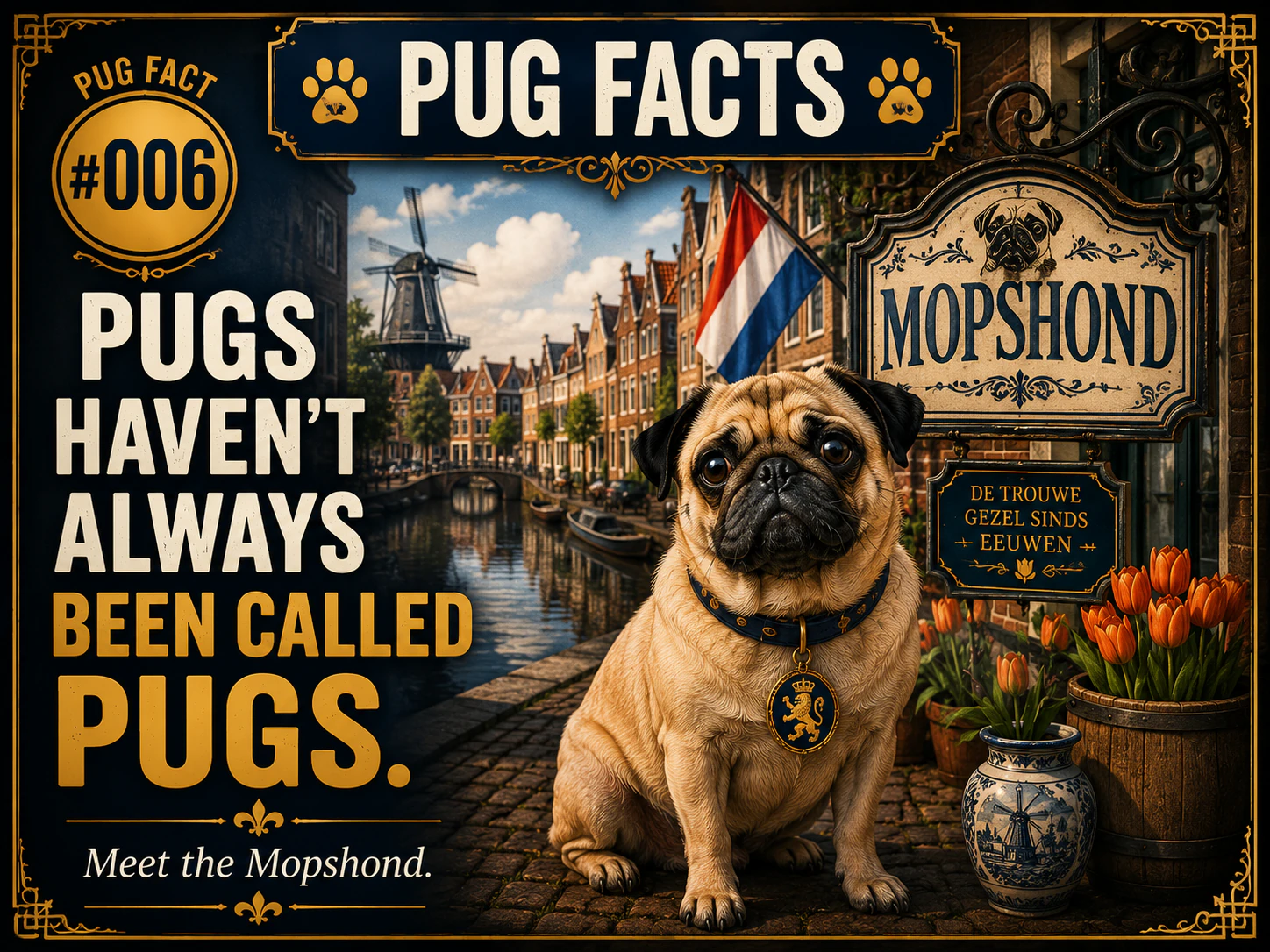
Meet the Mopshond
A Pug by any other name would probably still steal your chair. But depending on where in Europe you met one, "Pug" might not have been the name you heard.
In Dutch, the breed English speakers call the Pug is known as the Mopshond. It is a name for the same modern breed, not a separate dog that only happens to look similar.
One Dog, Several European Names
As Pugs became established across Europe, different languages used different names for the breed. Mopshond is the Dutch name; Mops is used in German; and Carlin is the French breed name. In English-speaking settings, Pug became the familiar name.
Those names are best understood as documented language and breed usage, not as a tidy single timeline. The breed crossed borders, entered royal courts and households, and accumulated names along the way.
How "Pug" Became Familiar in English
The English name Pug is familiar, but its exact etymology is not completely settled. Reputable breed histories present more than one theory, so it is wiser to treat proposed word origins as explanations under discussion rather than as established fact.
The history of the name is therefore less certain than the history of the usage: English speakers came to call this distinctive companion breed a Pug, while other European languages kept their own names for it.
Same Pug, Different Passport
A Pug could move from a Dutch canal town to a German household or a French salon and receive a different introduction without becoming a different kind of dog. The names followed the language; the companion stayed the same.
Pug, Mopshond, Mops, or Carlin - each name carries a little piece of the breed's European journey. One extraordinarily recognizable little dog simply collected several introductions along the way.