
Pug Fact #005 · Pug Facts
The Secret Society of the Pug
In 18th-century Europe, the Pug became the symbol of an unusual society known as the Order of the Pug.
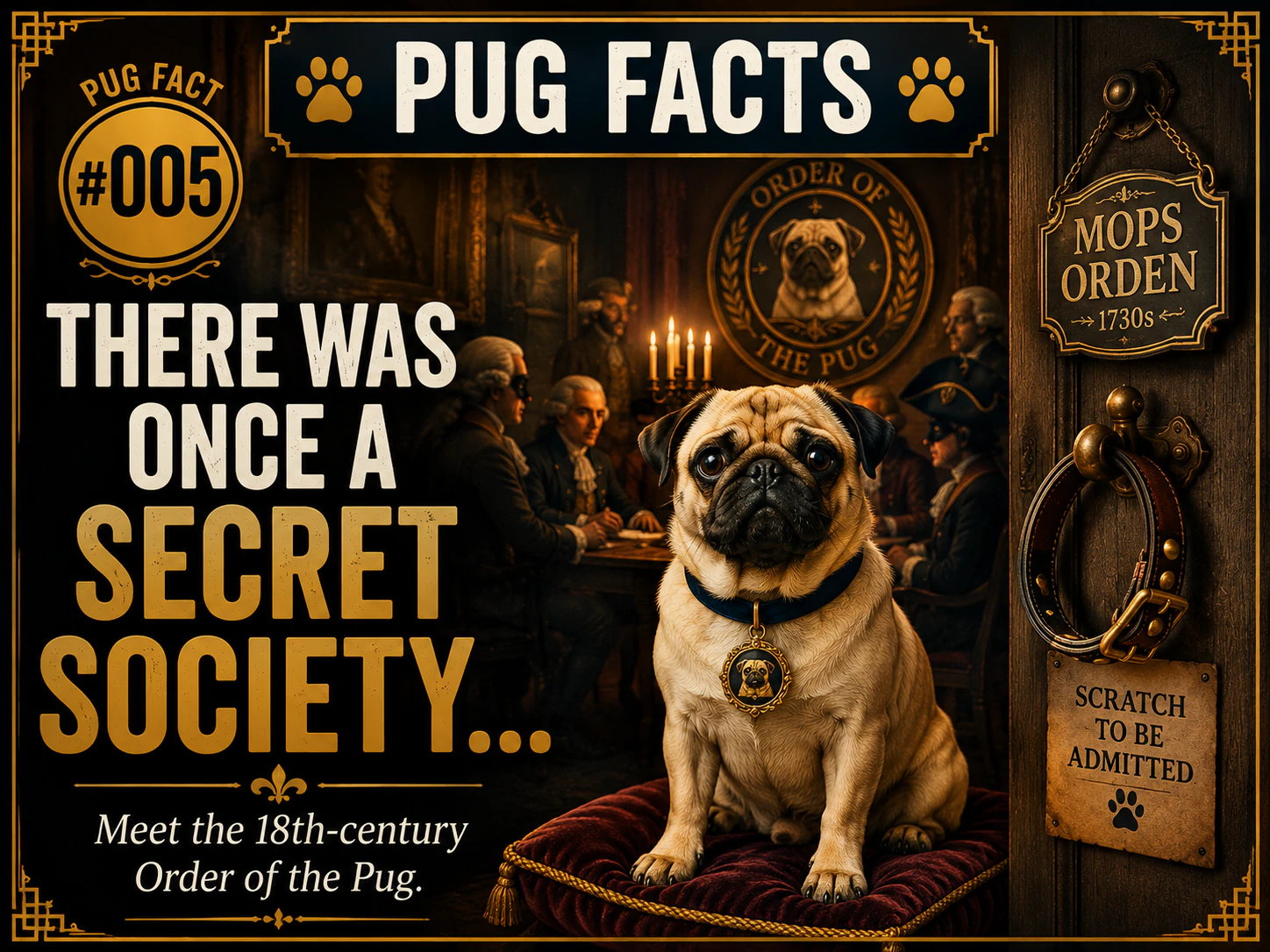
A Very Strange Pug Club
Pugs have been royal companions, family dogs, and works of art. But in 18th-century Europe, they picked up a considerably stranger job: symbol of a secret society.
The Order of the Pug, often referred to by the German name Mops-Orden, is described in historical accounts as an unusual society that used the Pug as its emblem. Accounts commonly connect its emergence with the period after Pope Clement XII's 1738 prohibition against Catholic participation in Freemasonry, though that context should not be reduced to a simple one-for-one replacement story.
Why a Pug?
Historical accounts associate the Pug with qualities such as loyalty, devotion, and trustworthiness. Those traits helped make the breed an appropriate symbolic figure for a society that wanted to present itself through the image of a faithful companion.
It is a wonderfully unexpected role for a dog best known for following people from room to room. In the Order's story, the Pug represented more than a fashionable pet: it stood for the kind of loyalty members wanted their society to embody.
Scratch at the Door
The Order's reported initiation traditions are where the story becomes especially strange. Accounts describe candidates taking part in deliberately dog-themed rituals, including wearing a collar and scratching at a door to gain admission.
Those details come to us as reported traditions surrounding a secret society, not as a modern recording of every ceremony. The genuine historical account is unusual enough without adding colorful details that the surviving sources do not support.
Separating History From Legend
Secret societies are difficult historical subjects by nature. The existence of the Order, its association with the Pug, reported ritual traditions, and later retellings do not all rest on exactly the same kind of evidence.
So the careful version is also the most interesting one: the Order of the Pug belongs to genuine Pug history, while individual stories about its rituals should be presented as historical accounts or traditions rather than as details established with modern certainty.