
Pug Fact #004 · Pug Facts
Pugs Didn't Always Look Like This
Historical artwork gives us a fascinating visual record of how Pugs depicted in different periods compare with today's breed.
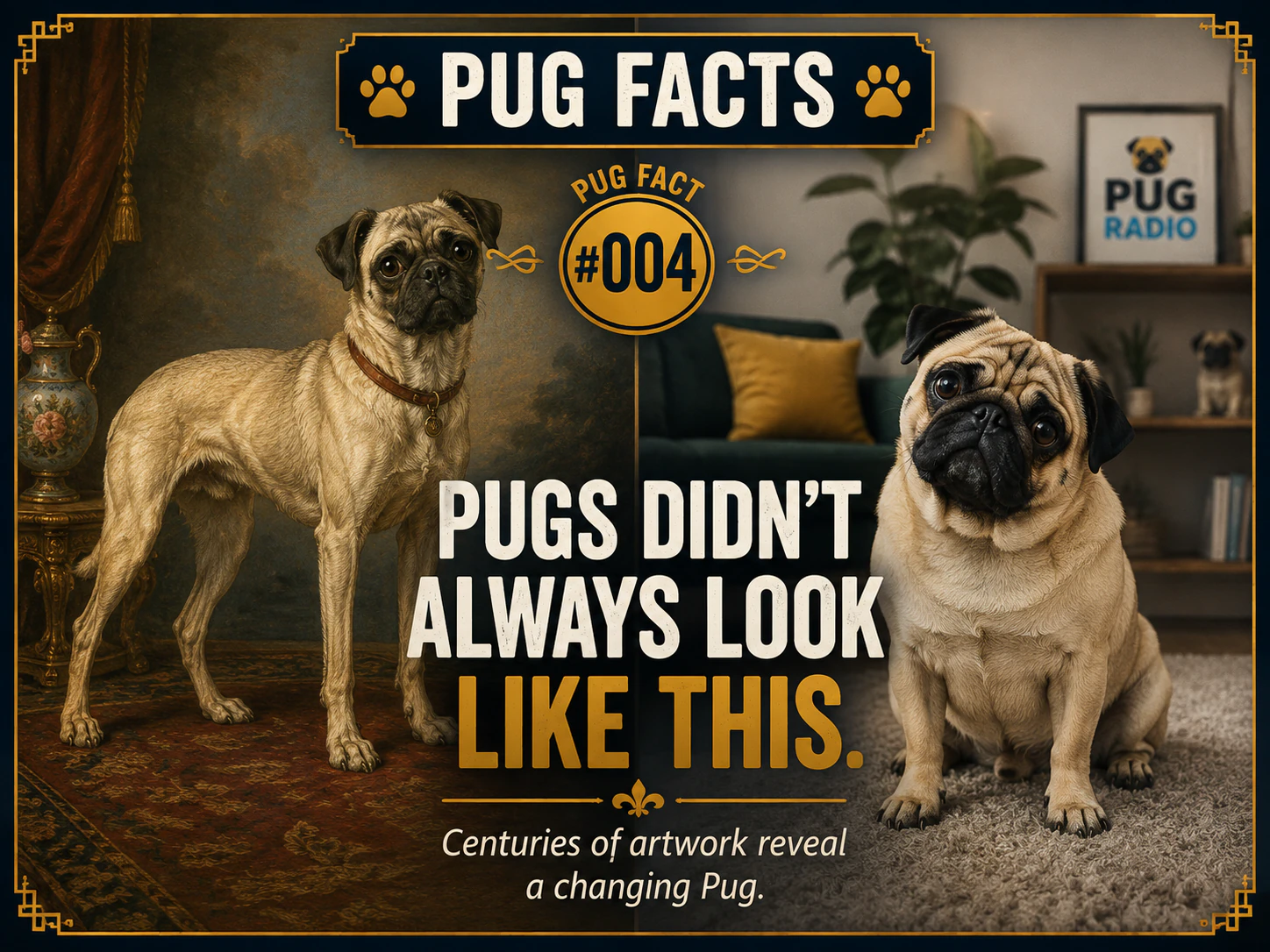
A Pug From Another Century
Put a Pug from an old European painting beside a modern Pug and you might need a second look. The familiar expression is there, but the silhouette can be surprisingly different.
Some surviving paintings depict dogs identified as Pugs with a leggier build, a less compact body, a more projecting muzzle, or a different head shape. Those are observations about particular works, not a description of every historical Pug.
Paintings Become a Historical Record
Pugs became fashionable companion dogs in Europe and appeared alongside prominent owners, so artists included them in paintings and decorative art. The surviving works give us a visual record of dogs identified as Pugs from different periods.
One documented example is Giacomo Ceruti's An Old Man with a Dog, which The Metropolitan Museum of Art dates to the 1740s and identifies as showing a man with his Pug.
The Pug Keeps Changing
Dog breeds are not visually frozen in time. Selective breeding and changing preferences can alter physical characteristics over generations, and the modern Pug's familiar appearance developed through that long process.
Historical artwork is therefore a window into variation, not a simple before-and-after chart. The Pug has stayed recognizable while its proportions and presentation have shifted across generations.