
Pug Life #002
Why Do Pugs Snore So Much?
Small dog. Surprisingly large sound system.
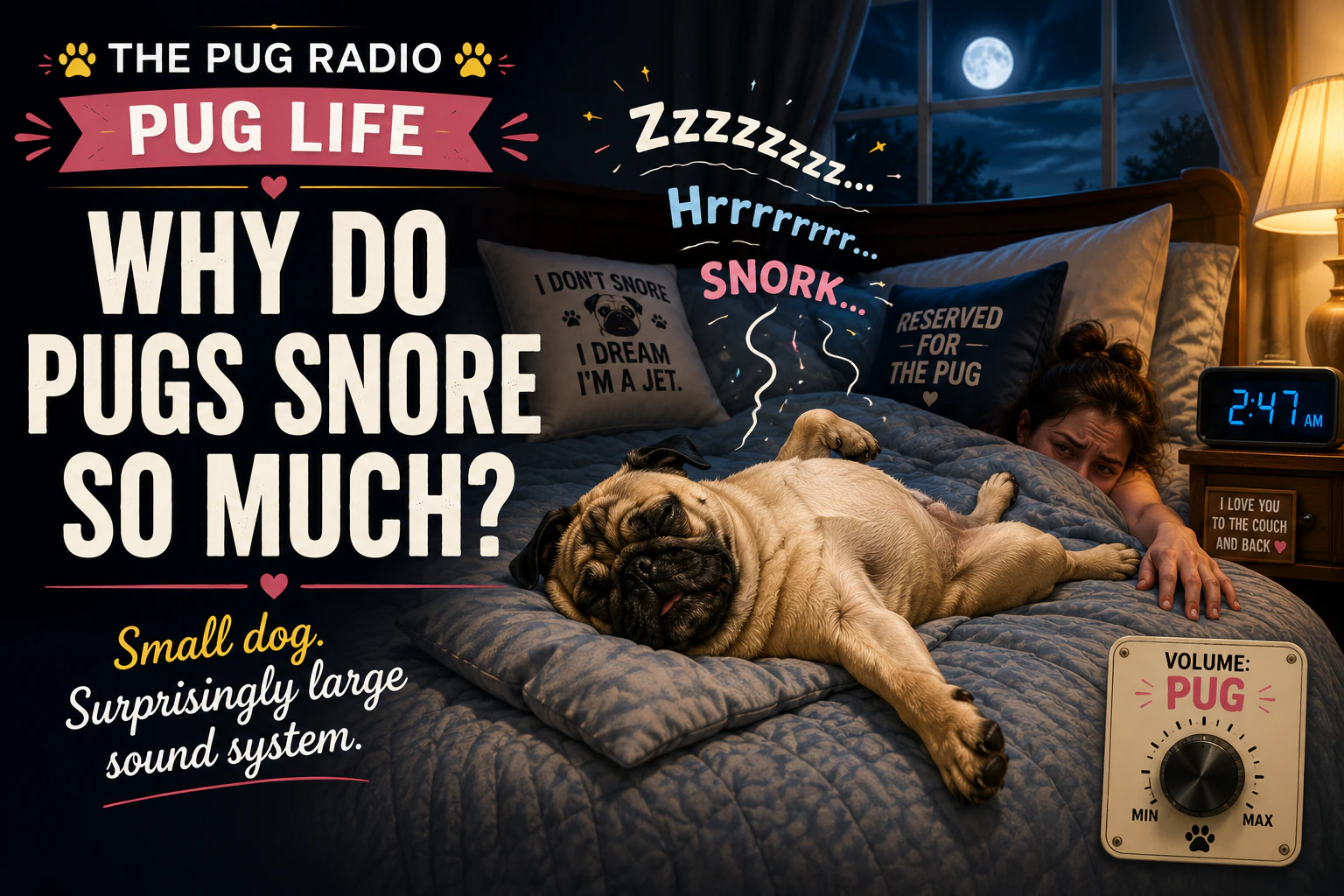
Editorial artwork by The Pug Radio
How Is That Coming From That Dog?
The house is quiet. Everyone is asleep. Then somewhere in the darkness: Hrrrrrrrr... Snork. Zzzzzzzzz... And somehow the noise is coming from a dog that weighs a fraction of what the humans do.
Welcome to the famous Pug snore: an impressive little soundtrack that deserves a laugh, a little context, and occasionally a call to the veterinarian.
It Starts With Anatomy
Pugs have a characteristically short skull and muzzle, so structures around the nose, mouth, throat, and upper airway occupy a relatively compact space. During sleep, relaxed soft tissues can vibrate as air moves through the upper airway, producing snoring.
Why Sleep Makes It Louder
As a dog sleeps, muscle tone changes and tissues around the upper airway can relax. Air moving past those tissues may create vibration and sound. Sleeping position can also change how noticeable the noise is, and individual dogs differ.
The Pug Sleeping-Position Olympics
Curled into a tiny ball. Stretched across the entire bed. Upside down. Head halfway off a cushion. A Pug can weigh twenty pounds and somehow occupy approximately eighty percent of a king-size mattress. These positions are household comedy, not a medical prescription or cure.
Why Some Pugs Are Louder Than Others
Individual anatomy differs, so not every Pug snores with the same volume, frequency, tone, or intensity. Upper-airway anatomy, sleep depth, position, and body condition can all be part of the picture. Noisy sleep is not a diagnosis by itself.
When a Snore Is Just a Snore
A relaxed dog that occasionally or routinely makes sleeping noises may simply be snoring. Context matters: a dog comfortably asleep, otherwise breathing comfortably while awake, behaving normally, and recovering normally after ordinary activity presents a different picture from a dog showing obvious respiratory difficulty.
When Not to Laugh It Off
Pugs are among the breeds associated with brachycephalic obstructive airway syndrome (BOAS), but snoring alone cannot diagnose it. Breathing that appears labored, significant difficulty recovering after activity, collapse, abnormal blue, gray, or unusually pale gum or tongue color, severe heat intolerance, or a meaningful change in breathing deserves veterinary attention. If your Pug appears to be struggling for air, collapses, or develops abnormal gum or tongue color, seek veterinary care promptly.
Heat Deserves Respect
Short-faced dogs can be particularly vulnerable to heat-related breathing problems. Keep heat safety in mind and discuss individual risks with your veterinarian; this article is not a substitute for a complete heat-safety plan.
The Pug Radio Sound System
The Gentle Rumble: barely audible. The Tiny Tractor: steady and surprisingly mechanical. The Snork: one sudden noise followed by complete silence. The Full Pug: the sound that makes you check whether someone started yard equipment outside. These are Pug Radio jokes, not veterinary categories.
Can You Stop a Pug From Snoring?
Occasional snoring is not necessarily something that needs to be fixed. Because airway anatomy and medical conditions can contribute to noisy breathing, persistent or concerning cases should be discussed with a veterinarian rather than treated through internet tricks. Do not assume a home remedy, device, supplement, or sleeping position is appropriate treatment.
The Night Shift
You finally get comfortable. The lights go out. The room becomes quiet. Then the tiny dog beside you starts sounding like industrial equipment. And somehow, five minutes later, you realize you would miss the sound if it were not there. The joke is about ordinary sleeping noises, never about a dog struggling to breathe.