
Pug Life #001
Why Does My Pug Follow Me Everywhere?
Because life is different when a Pug lives with you.
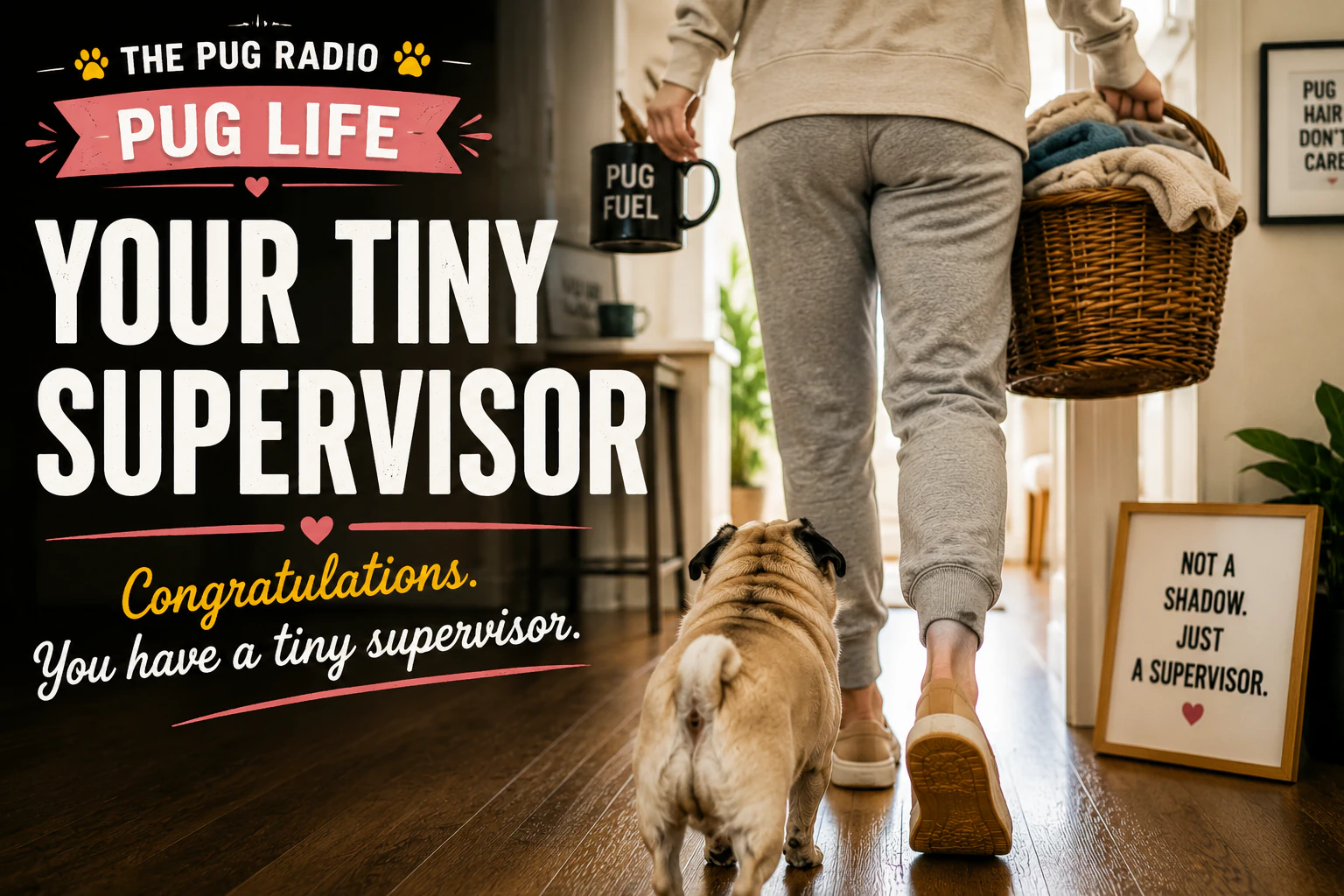
Editorial artwork by The Pug Radio
Your Tiny Shadow
You stand up. The Pug stands up. You walk into the kitchen. The Pug walks into the kitchen. You turn around, and there they are: approximately one foot behind you.
This kind of shadowing is familiar to many Pug people. Pugs are highly social companion dogs, though individual dogs can differ.
Pugs Were Built Around Companionship
Pugs were developed primarily as companion dogs, not for herding, hunting, guarding livestock, or pulling sleds. Their long association with close human companionship helps explain why staying near people can come naturally.
That history is part of the bigger story in Pug Fact #001 and Pug History #001, but it is not a rulebook for every individual Pug.
You Are Where Things Happen
Humans control many things a dog cares about: meals, treats, doors, walks, toys, attention, cuddles, car rides, and interesting household activity. From your Pug's perspective, following management around the building has excellent benefits.
Pugs Learn Your Routine
Dogs notice patterns. Shoes may mean a walk, the kitchen may mean food, a particular chair may mean cuddle time, keys may mean someone is leaving, and bedtime may mean moving to another room. Following can be an anticipatory response to those familiar cues.
Curiosity Has a Lot to Do With It
Sometimes the answer is simply that something is happening and the Pug would like to inspect it. New sounds, smells, objects, grocery bags, packages, blankets, and snacks all deserve a professional household investigation.
Attention Can Reinforce the Habit
If following regularly leads to petting, conversation, treats, being picked up, play, or access to another room, the behavior can become more likely. Dogs tend to repeat behaviors that reliably lead to rewarding outcomes; affection is not a mistake, it is just part of the pattern.
Is It Separation Anxiety?
Following a person around the house by itself does not automatically mean separation anxiety. A relaxed, happy social Pug may simply enjoy companionship. Intense distress when left alone, including panic-like behavior or destructive escape attempts, is a different concern. If your dog becomes intensely distressed when left alone, talk with your veterinarian or a qualified behavior professional rather than assuming ordinary shadowing and separation anxiety are the same thing.
Should You Stop Your Pug From Following You?
Usually there is no need to turn relaxed companionship into a problem. It is also healthy for dogs to be comfortable settling on their own bed, enjoying a safe chew or toy, resting while you move around, and spending short, appropriate periods independently. The goal is balance, not rejection.
The Pug Radio Explanation
Your Pug may follow you because you are their companion, their routine, their entertainment department, their transportation service, and occasionally the person most likely to drop cheese. For many Pugs, being near their people is simply part of what makes life rewarding.