
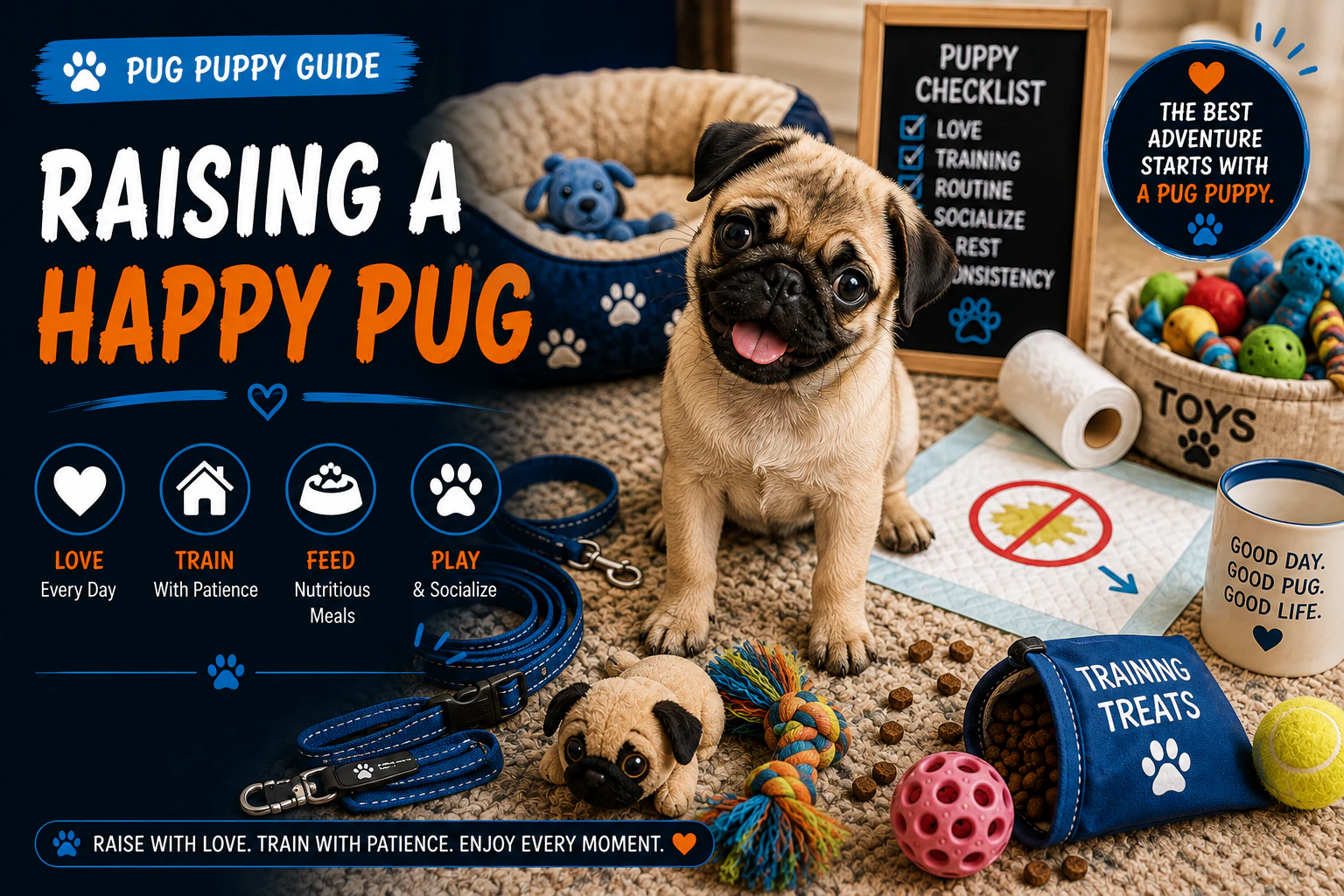
A pug puppy can make every room feel more entertaining, but raising one is a real daily commitment. The early months are full of play, naps, training, social learning, and steady care. This guide offers general educational information, not individualized veterinary or training advice; your veterinarian and a qualified, reward-based trainer can help you make choices for your puppy.
Bringing Your Pug Puppy Home
Before your puppy arrives, make a plan for the first few quiet days: food, water, a safe sleep area, bathroom breaks, and time to settle in. Keep the welcome calm so your puppy can get to know their new people and space without too much pressure.
Schedule an early veterinary visit and bring any records you received. Your veterinarian can help continue an appropriate vaccination, parasite prevention, nutrition, and wellness plan.
Creating a Safe Puppy Space
A puppy-safe room, pen, or crate can give your pug a predictable place to rest when you cannot supervise closely. Make the space comfortable, secure, and free from small objects, cords, medications, and other tempting hazards.
A crate or pen should be introduced as a positive resting space, never as a punishment. Pair it with calm routines, comfortable bedding, and appropriate chew options.
Establishing a Daily Routine
Regular meals, bathroom breaks, rest, play, and short training sessions help a puppy understand what to expect. Consistency makes the early weeks easier for both the puppy and the people caring for them.
Keep routines flexible enough to follow your puppy's development and your veterinarian's guidance, but predictable enough that everyone in the household knows who is handling each task.
House Training
House training takes time, repetition, and calm supervision. Take your puppy to the chosen bathroom area often, reward success immediately, and clean accidents without drama.
Punishment can make a puppy confused or fearful. If accidents are frequent, suddenly increase, or seem paired with discomfort, ask your veterinarian for guidance.
Positive-Reinforcement Training
Reward-based training helps a puppy connect good choices with things they enjoy: food, play, praise, and access to the next activity. Keep lessons short, simple, and set up for success.
Focus on useful everyday skills such as responding to their name, coming when called in a safe setting, gentle handling, and settling. A qualified trainer can help when you need support.
Socialization
Safe, positive exposure to people, handling, household sounds, surfaces, and new places can help a puppy grow into a confident adult. Let your puppy choose the pace; forcing a worried puppy into an interaction can backfire.
Ask your veterinarian about safe socialization choices while vaccinations are still in progress. Well-run puppy classes and carefully chosen experiences can be valuable.
Feeding & Healthy Growth
Puppies need food that is complete and balanced for their life stage. Your veterinarian can help with portions, meal timing, growth questions, and any concerns about appetite or weight.
Avoid assuming that a supplement, online feeding trend, or a product shown in artwork is right for your puppy. Growing dogs have individual nutritional needs.
Play, Exercise & Rest
Puppies need bursts of play, gentle exploration, and plenty of rest. Choose activities that fit your puppy's age, development, comfort, and the weather.
Pugs are short-muzzled dogs, so heat and overexertion deserve special care. Keep activity measured, offer water and cool breaks, and contact a veterinarian for concerning breathing or recovery changes.
Puppy Biting & Chewing
Mouthing and chewing are normal puppy behaviors, but they still need patient direction. Offer safe, appropriate chew items and redirect calmly when teeth land on hands, clothes, or household objects.
Avoid games that encourage rough handling. Consistent, gentle boundaries are more useful than startling or punishing a puppy.
Grooming and Handling From an Early Age
Brief, positive practice with paws, ears, mouth, brushing, and gentle restraint can make future grooming and veterinary care easier. Keep sessions short, reward calm behavior, and stop before your puppy becomes overwhelmed.
If you notice pain, skin irritation, ear symptoms, eye changes, or strong resistance to touch, discuss it with a veterinarian rather than trying to push through.
Introducing a Collar, Harness & Leash
Introduce new equipment gradually with treats and short, positive practice. A harness is often worth discussing with your veterinarian for a short-muzzled dog because it avoids pressure around the neck.
Check fit often as a puppy grows. Equipment should not rub, restrict movement, or make breathing less comfortable.
Puppy-Proofing the Home
Walk through your space at puppy level. Secure medication, cleaning products, cords, laundry, small objects, food, and anything that could be chewed, swallowed, or tipped over.
Use gates, closed doors, and supervision to prevent practice of unsafe habits. Giving a puppy an appropriate toy is often easier than repeatedly asking them to ignore a tempting object.
Veterinary Care & Vaccinations
A veterinarian should guide your puppy's wellness visits, vaccine schedule, parasite prevention, nutrition, and developmental questions. Bring records from the breeder, rescue, or previous caregiver so the plan starts with the best information available.
Seek veterinary advice promptly if your puppy seems ill, is struggling to breathe, has persistent vomiting or diarrhea, seems painful, or has a change that concerns you.
Building Confidence and Trust
Trust grows through predictable care, gentle handling, play, rest, and lots of chances to succeed. Let your puppy explore safely and reward curiosity without demanding bravery on command.
A confident puppy is not one who never feels unsure; it is one who learns that their people will listen, protect them, and give them time.
Common New-Puppy Mistakes
Common early mistakes include expecting too much too soon, changing routines constantly, giving too much freedom without supervision, and treating normal puppy behavior as defiance. Patience and management solve a surprising amount.
Another mistake is relying on generic advice when something feels medically or behaviorally off. Your veterinarian and a qualified trainer are part of the support team, not a last resort.
Professor Pug's Quick Lesson
Professor Pug's quick lesson: puppies do not need perfection. They need patient routines, kind guidance, safe choices, and a home that celebrates the tiny wins.
Related Learning Center Lessons
Keep learning with Professor Pug.


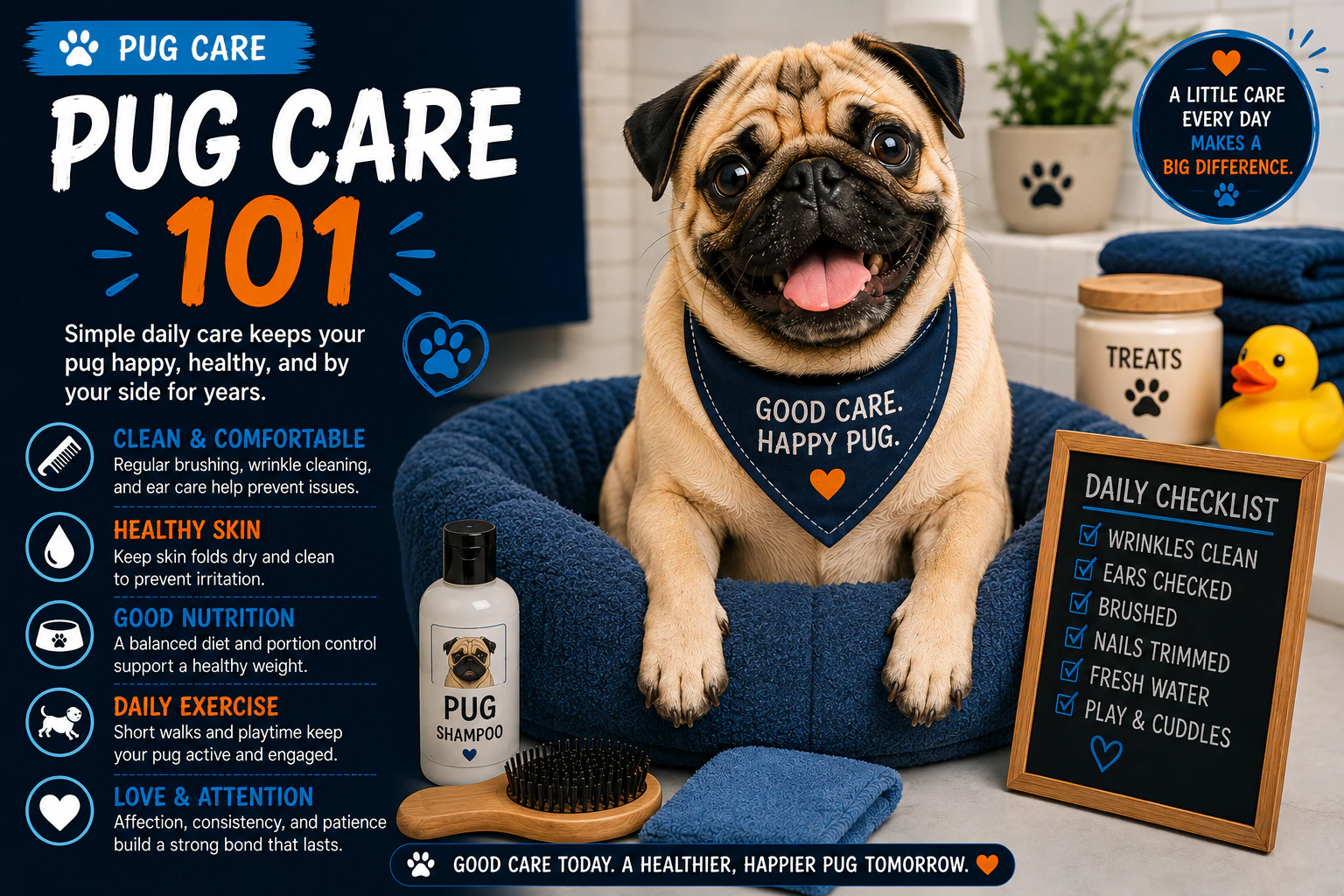
Explore everyday life with pugs in Pug Corner.
Back to the Learning CenterHelpful veterinary resources
This article is educational and is not a substitute for veterinary care.