
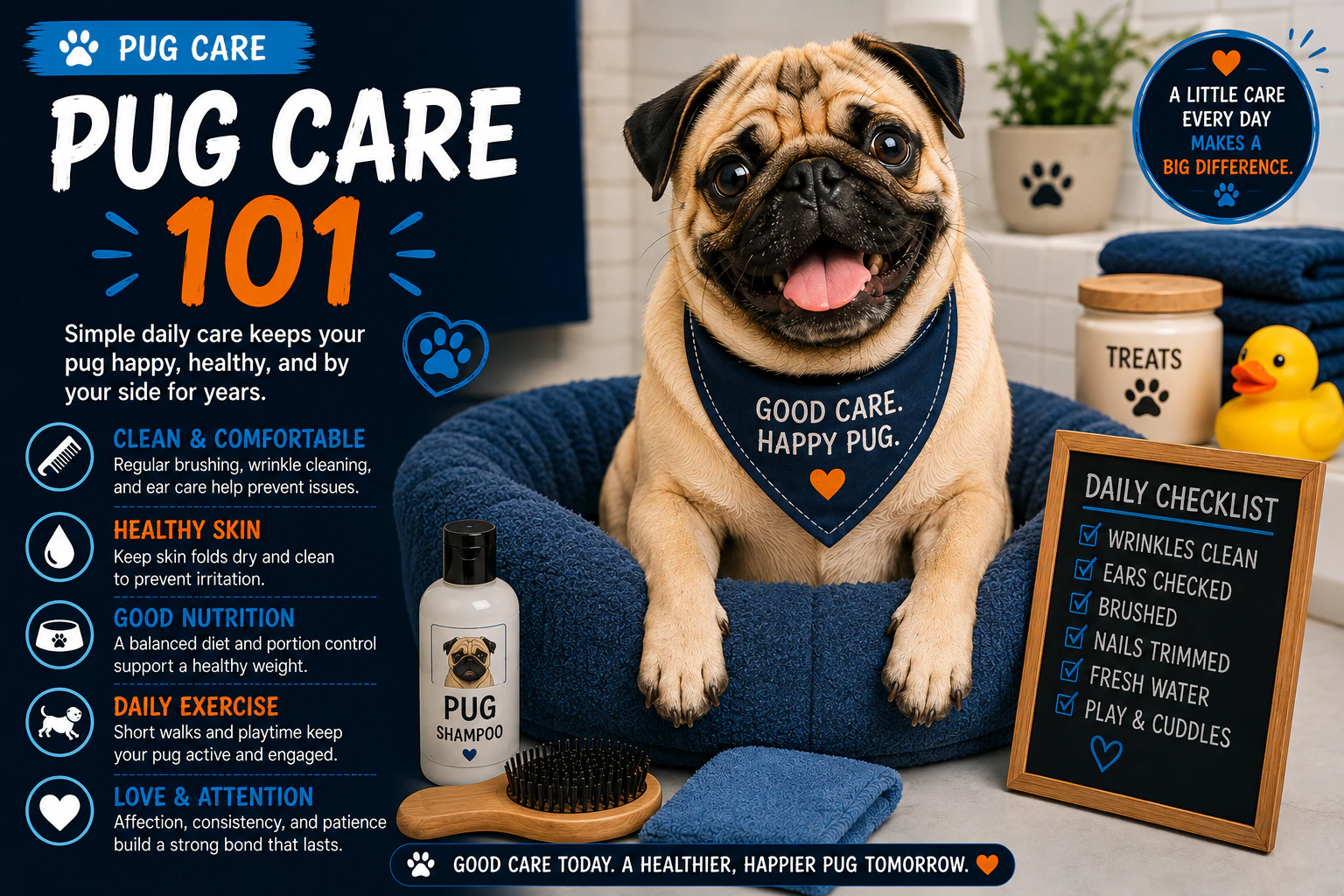
Everyday pug care is made of small, repeatable habits: looking closely, keeping your dog comfortable, and noticing when something has changed. This guide is general educational information, not a diagnosis or treatment plan. Your veterinarian can help tailor grooming, nutrition, activity, and home-care choices to your own pug.
The Basics of Everyday Pug Care
A simple routine can make care feel less overwhelming. Feed an appropriate diet, offer fresh water, provide safe activity and companionship, and set aside a few calm minutes for regular observation.
Use those check-ins to notice normal patterns for your pug: their appetite, energy, breathing, skin, ears, eyes, coat, movement, and bathroom habits. A change from their usual baseline is useful information for a veterinary conversation.
Caring for Facial Wrinkles and Skin Folds
Pug facial folds can hold moisture and debris. Ask your veterinarian what gentle routine is appropriate for your dog, then be consistent and make it a calm, positive experience.
Redness, odor, discharge, irritation, sores, or obvious discomfort are not a home diagnosis project. Pause new products and contact a veterinarian for guidance.
Ear Care
Healthy ears do not necessarily need frequent cleaning. Check for dirt, unusual wax, odor, redness, head shaking, scratching, or sensitivity, and follow the ear-care routine your veterinarian recommends.
If ear cleaning causes pain, stop and contact your veterinarian. Do not insert cotton swabs deeply into the ear canal or use medicated products without professional advice.
Nail Care
Comfortable nails support normal footing and movement. Trimming frequency varies, so get guidance on a schedule and technique that works for your pug and their lifestyle.
If nail care is stressful, go slowly with reward-based handling or ask a veterinary or grooming professional for help. Sudden limping, a torn nail, or persistent paw pain needs attention.
Brushing, Shedding & Coat Care
Pugs have short coats but can shed generously. Gentle, regular brushing can remove loose hair and gives you a chance to check the skin for new changes.
Choose grooming tools that are comfortable for your dog. Hair loss, irritated skin, or repeated scratching should be discussed with a veterinarian rather than treated by trial and error at home.
Bathing Your Pug
Bathing needs vary from dog to dog. Use a dog-safe product recommended for your pug's skin needs, rinse thoroughly, and dry the coat and folds well.
Too much bathing or harsh products can irritate skin. If you are seeing ongoing odor, flaking, redness, or itchiness, ask a veterinarian before changing products repeatedly.
Dental Care
Dental health belongs in an everyday care plan. Talk with your veterinary team about professional dental examinations and home-care options that are safe and realistic for your dog.
Changes such as bleeding gums, trouble eating, persistent bad breath, swelling, or pawing at the mouth should be brought to a veterinarian's attention.
Healthy Weight & Nutrition
A healthy body condition can support comfort, mobility, and breathing. The right portions and food depend on age, activity, health history, and individual needs, so a veterinarian can help set a practical plan.
Keep treats and changes in food in perspective. Avoid making major diet changes or using supplements as treatment without veterinary guidance.
Exercise and Daily Activity
Pugs benefit from daily movement and play that match their comfort and fitness. Short, calm sessions can be more suitable than strenuous exercise, especially in warm or humid weather.
Watch recovery as closely as activity. Stop if your pug seems distressed, overheated, unusually tired, or uncomfortable, and seek veterinary guidance for new exercise intolerance or breathing concerns.
Eyes and Routine Observation
Prominent pug eyes deserve gentle daily notice. Look for squinting, redness, cloudiness, swelling, discharge, pawing, or a sudden change in how an eye looks or how your pug uses it.
A painful or suddenly changed eye needs prompt veterinary evaluation. Do not use leftover eye medication or try to treat an eye injury at home.
Building a Simple Care Routine
Choose a routine you can maintain: a quick daily look, regular brushing, a weekly check of ears and nails, and reminders for veterinary care. Keep supplies simple and use positive reinforcement so care does not become a battle.
A short note on your phone can help you track what is normal and flag changes worth asking about at the next visit.
When to Ask Your Veterinarian
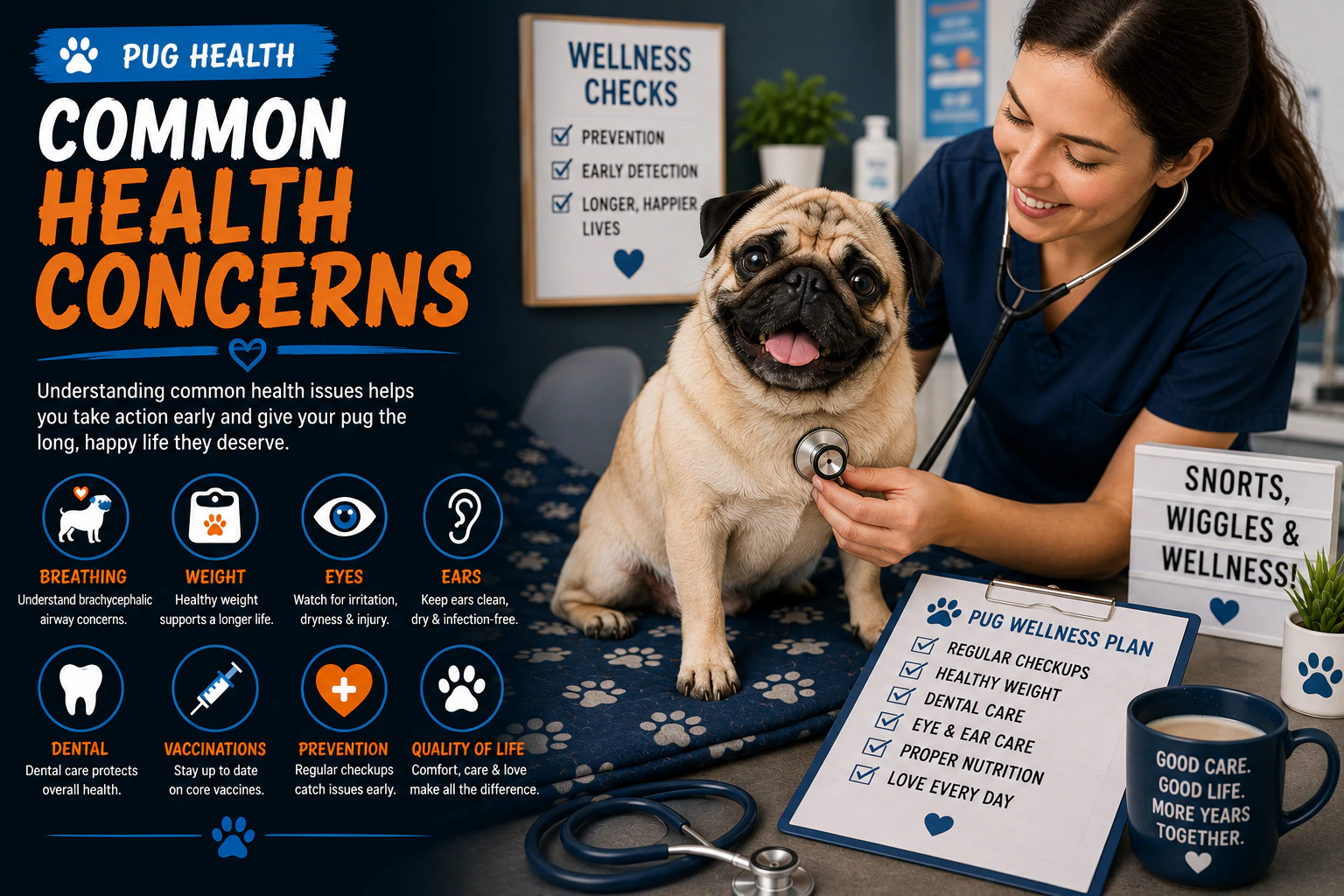
Ask about anything that is new, persistent, worsening, painful, or changing your pug's normal routine. Skin problems, ear symptoms, eye changes, dental discomfort, altered mobility, and breathing changes all deserve a professional opinion.
Difficulty breathing, collapse, severe eye problems, significant pain, overheating, or sudden weakness or neurologic changes need urgent veterinary or emergency veterinary care.
Professor Pug's Quick Lesson
Professor Pug's quick lesson: good care is not complicated, but it is consistent. A few gentle habits and a veterinary team you trust go a long way.
Related Learning Center Lessons
Keep learning with Professor Pug.

Explore everyday life with pugs in Pug Corner.
Back to the Learning CenterHelpful veterinary resources
This article is educational and is not a substitute for veterinary care.