
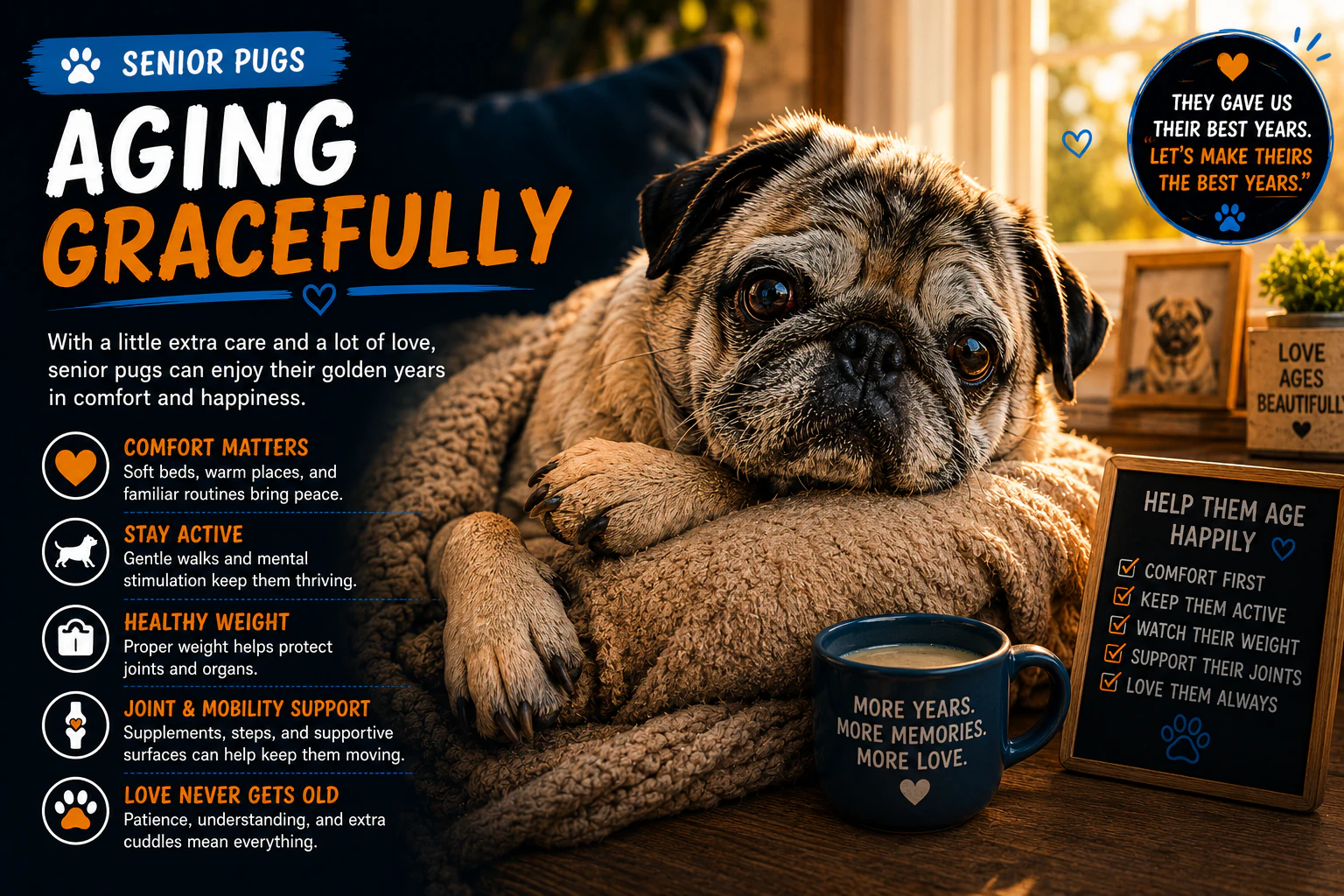
A gray muzzle is not a warning sign; it is a little record of a life well lived. Senior pugs can still enjoy affection, familiar routines, gentle adventures, and the pleasure of being close to their people. This article is general educational information, not a diagnosis or treatment plan, and a veterinarian can help shape care around your individual dog's needs.
When Is a Pug Considered a Senior?
There is no single birthday that changes a pug from adult to senior. Aging looks different from dog to dog, and a veterinarian can help put your pug's age, health history, and daily function into context.
The more helpful question is often how your dog is doing: what still feels easy, what seems different, and what support helps them enjoy their normal day.
How Aging Can Change a Pug's Daily Life
Older dogs may sleep more, move more deliberately, hear or see differently, or take a little longer to recover from activity. These changes can be gradual, but a sudden shift is always worth discussing with a veterinarian.
Keep noticing appetite, drinking, bathroom habits, breathing, energy, comfort, and social behavior. Your knowledge of your pug's usual self is valuable.
Comfort at Home
Familiar, easy-to-reach resting places and steady routines can make home feel especially good for an older pug. Consider whether your dog has comfortable traction, an easy route to water, and a quiet place to rest away from household bustle.
Any change should fit your dog's abilities and your home's safety. If you are unsure how to adapt a space for a mobility or vision change, ask your veterinary team for ideas.
Mobility & Joint Support
Hesitation rising, limping, slowing on walks, avoiding stairs, or a change in gait can signal discomfort or another health issue. A veterinarian can evaluate the cause and discuss options suited to your dog.
Avoid starting supplements, pain medications, or exercise programs based on a general article. Senior dogs often have individual needs and may be taking other medications.
Exercise for Older Pugs
Gentle, regular activity and enrichment can help an older pug stay connected with the world. A slower sniff walk, a calm play session, or a simple food puzzle may be more enjoyable than a long or strenuous outing.
Choose activity around your pug's comfort, weather, breathing, and recovery. Stop when they seem tired or distressed, and talk with a veterinarian about new exercise intolerance.
Weight & Nutrition
Weight, body condition, appetite, dental comfort, and medical history can all influence food choices for a senior pug. A veterinarian can help identify a nutrition plan that fits the whole dog rather than simply choosing a food labeled for seniors.
Unexplained appetite or weight changes deserve a conversation with a veterinary team. Do not make major dietary changes or add supplements without their guidance.
Dental, Eye & Ear Care
Routine checks of the mouth, eyes, and ears stay important as a pug ages. Dental discomfort, eye changes, and ear symptoms can affect both comfort and daily behavior.
Squinting, redness, cloudiness, discharge, head shaking, ear pain, trouble eating, or bleeding gums should be evaluated by a veterinarian. Sudden or severe eye changes need prompt care.
Changes in Sleep and Behavior
An older dog may prefer different sleeping spots or a quieter routine. But new restlessness, confusion, nighttime changes, withdrawal, anxiety, irritability, or changes in social behavior are worth documenting and discussing with a veterinarian.
Behavior is communication. A short video or simple notes about when changes happen can make an appointment more informative.
Senior Veterinary Checkups
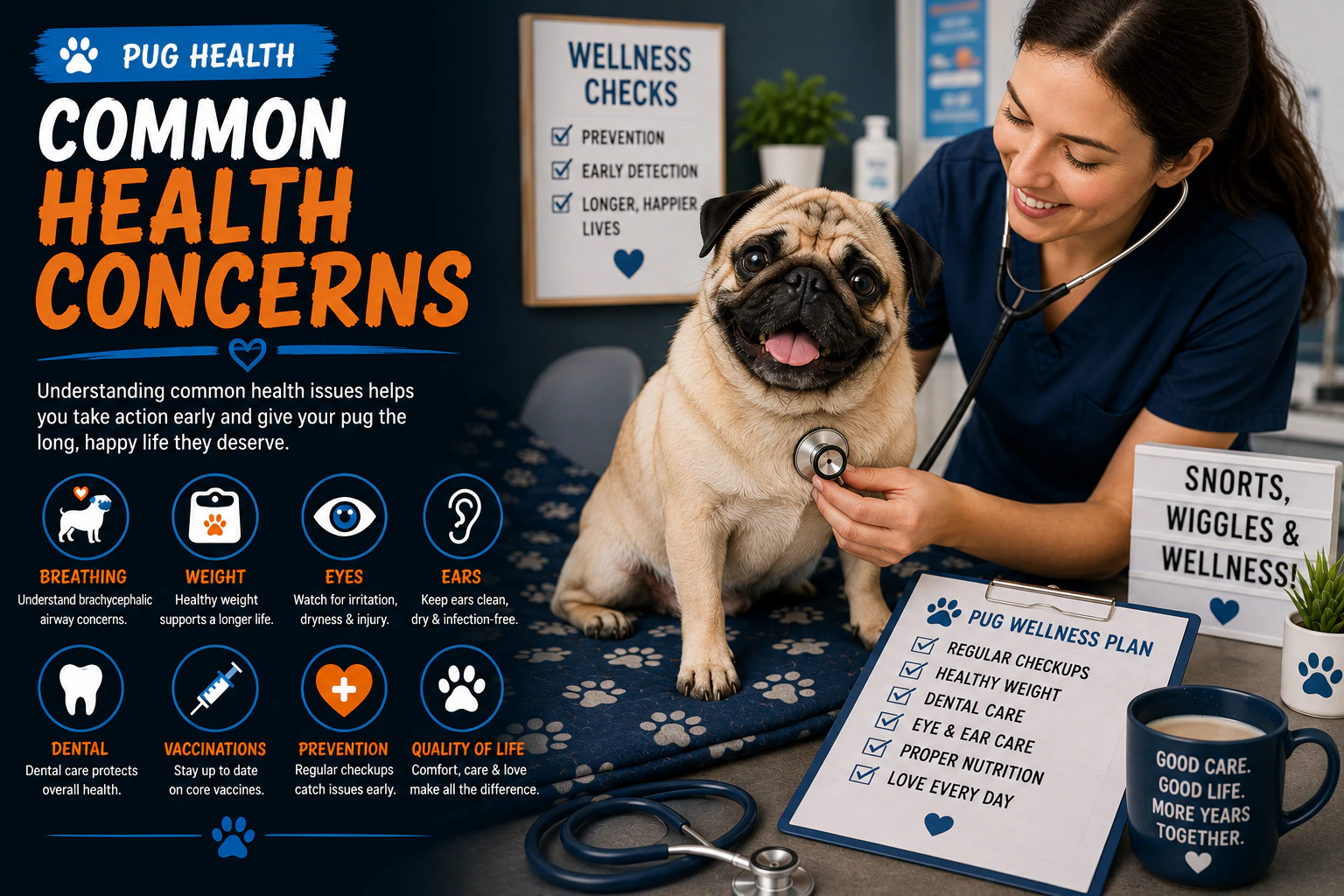
Regular senior wellness visits give a veterinary team a chance to track weight, mobility, dental health, and other subtle changes over time. Your veterinarian can recommend a visit schedule that fits your pug's health and life stage.
Bring questions, observations, and any medication or supplement list to each visit. Those small details help create a more complete picture.
Making Everyday Life Easier
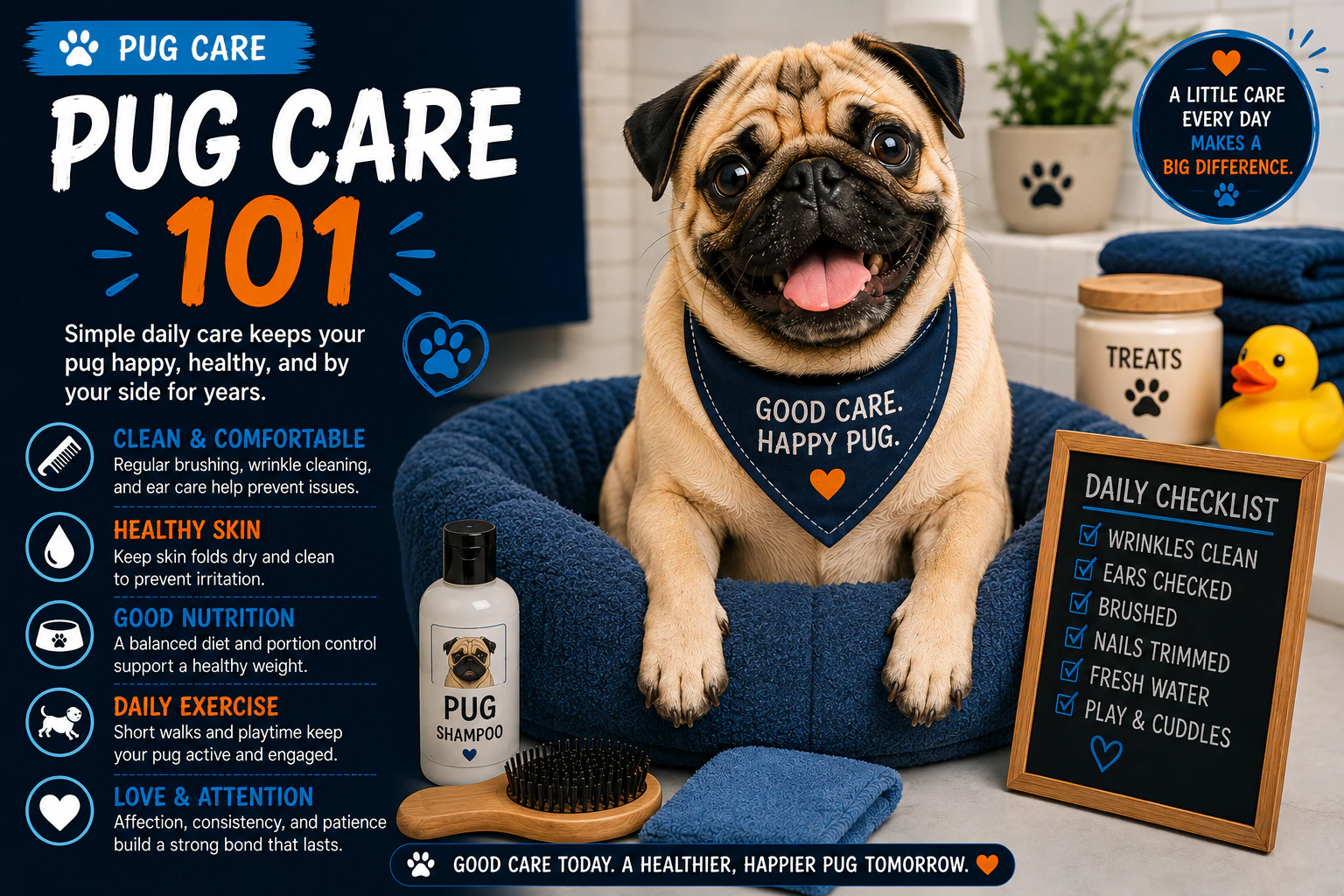
Small, thoughtful adjustments can help an older pug keep doing favorite things: a familiar route, a bed in a preferred room, gentle grooming, calm enrichment, or more pauses during a walk.
The best support is often the least dramatic: notice what makes your dog comfortable and keep their world easy to navigate.
Quality of Life & Knowing Your Pug
Quality of life is about more than one good day or one difficult moment. Look for the ordinary joys that matter to your pug: eating, resting comfortably, seeking you out, enjoying gentle activity, and feeling safe at home.
If pain, distress, reduced mobility, appetite changes, breathing issues, or behavior changes are affecting daily life, ask your veterinarian for an honest conversation about what support may help.
Professor Pug's Quick Lesson
Professor Pug's quick lesson: a senior pug does not need to be younger to be joyful. Familiar comforts, kind attention, and a good veterinary partnership make room for many more good days.
Related Learning Center Lessons
Keep learning with Professor Pug.

Explore everyday life with pugs in Pug Corner.
Back to the Learning CenterHelpful veterinary resources
This article is educational and is not a substitute for veterinary care.