
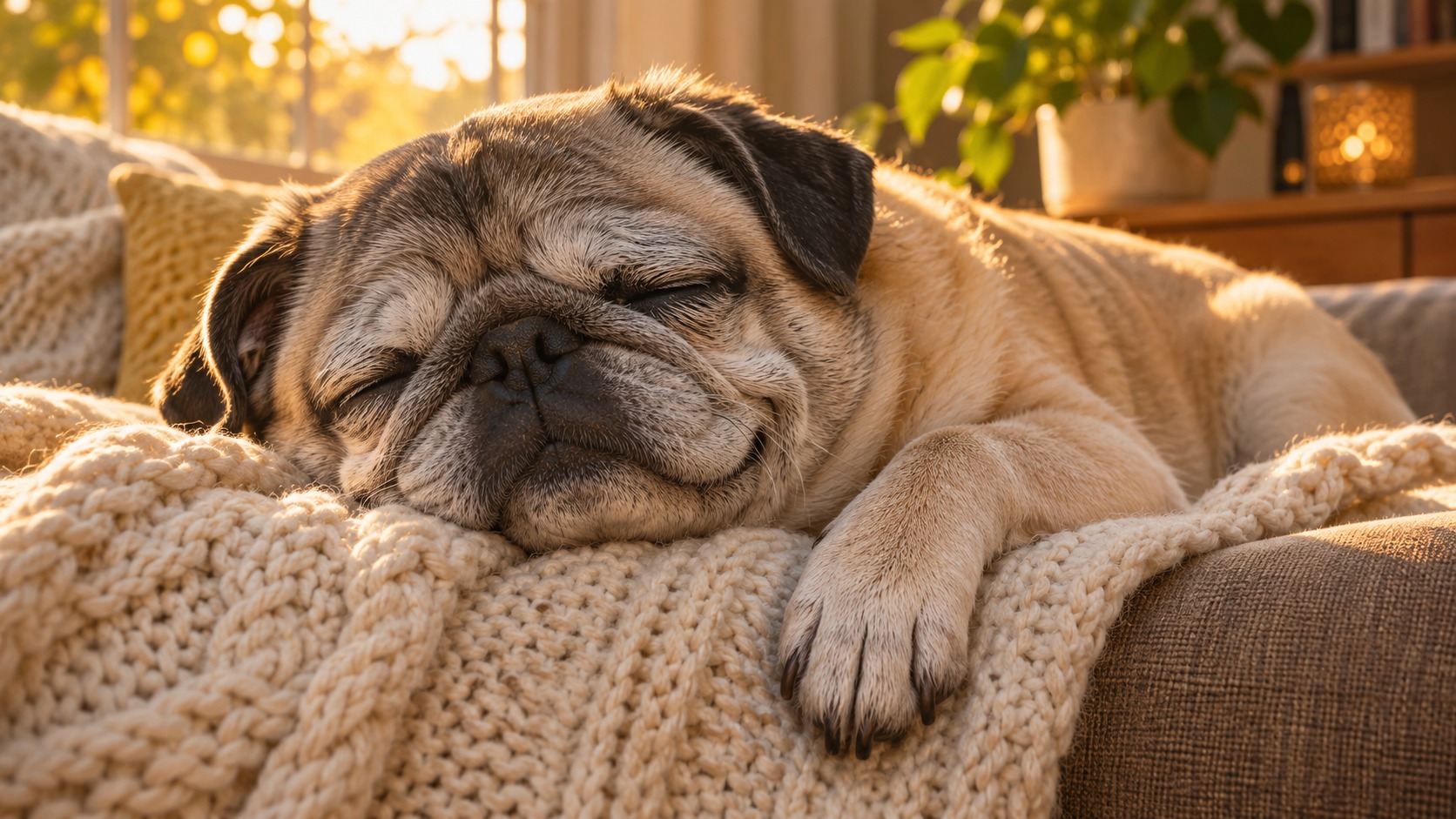
A healthy pug typically lives 12 to 15 years. Plenty of loved, well-kept pugs make it into their late teens. That's a range, not a promise—each pug is different, and your vet knows your pug best.
What affects a pug's lifespan?
Weight is one of the biggest things you can help manage. Keeping your pug lean supports easier breathing, comfortable movement, and better heat tolerance. Extra weight can make airway problems worse. Ask your vet what a healthy shape looks like for your dog; the number on the scale doesn't tell the whole story.
Breathing and airway health deserve attention throughout a pug's life. Their short faces can make breathing less efficient, especially during exercise or in warm, humid weather. Pugs can overheat quickly, so take walks in cooler hours, bring water, and choose shade. Skip hot pavement. If your pug is struggling to breathe or suddenly seems weak, stop and call your veterinarian.
Keep up with dental care, too. Regular brushing and veterinary dental checks can catch mouth problems before they become painful. Daily activity helps, but pug-sized activity is the goal: a short walk, a gentle game, and time to sniff every leaf on the block. No one needs to explain marathons to a pug. The American Kennel Club lists a typical pug life expectancy of 13–15 years, and veterinary guidance also highlights weight, breathing, heat, and routine care.
Do male or female pugs live longer?
There isn't a dependable boy-or-girl rule for predicting one pug's lifespan. Studies of dog populations can find small differences, but they can't tell you how long your own pug will live. For your dog, health, body condition, and day-to-day care matter more than sex.
What health problems can shorten a pug's life?
The main concerns include airway problems, obesity, eye injuries, and pug dog encephalitis. A short muzzle can make breathing harder, extra weight can add strain, and those big pug eyes are more exposed to scratches and ulcers.
Pug dog encephalitis—also called necrotizing meningoencephalitis—is the rare one on this list. It's a serious inflammatory brain disease associated with pugs that can affect young dogs. It's useful to know it exists; there's no need to spend every evening worrying about it.
What are the signs of an aging pug?
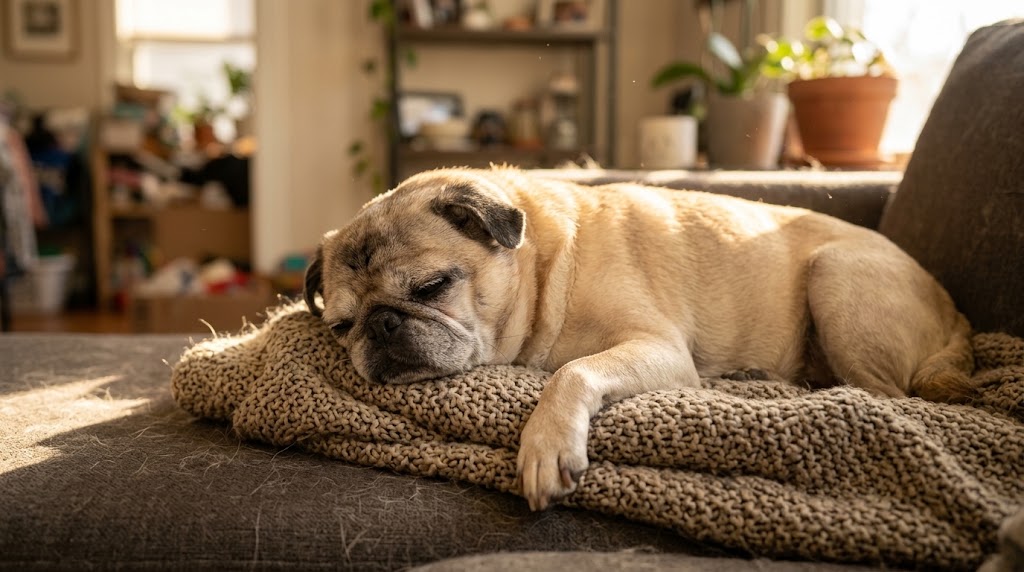
A gray muzzle, slower zoomies, and longer naps are familiar signs. Your older pug might also need help with stairs, shorter walks, or a comfier place to land. Senior pugs have had years to perfect their most important jobs: being your shadow, warming the blanket, and supervising the household.
How can I help my pug live longer?
- Keep meals measured and treats sensible so your pug stays lean.
- Ask your vet about twice-yearly checkups once your pug is a senior; regular exams can help catch subtle changes.
- Brush their teeth regularly and keep up with veterinary dental checks.
- In warm weather, offer shade, fresh water, cool indoor air, and walks during cooler hours.
- Give them gentle daily exercise at their own pace.
- Clean and dry facial wrinkles, and check their eyes for redness, squinting, or discharge.
If something seems off, ask your vet instead of trying to diagnose it from a late-night search.
For your senior pug's next cozy nap, put on The Pug Radio's dog sleep music at thepugradio.com.
Related Learning Center Lessons
Keep learning with Professor Pug.



Explore everyday life with pugs in Pug Corner.
Back to the Learning Center