
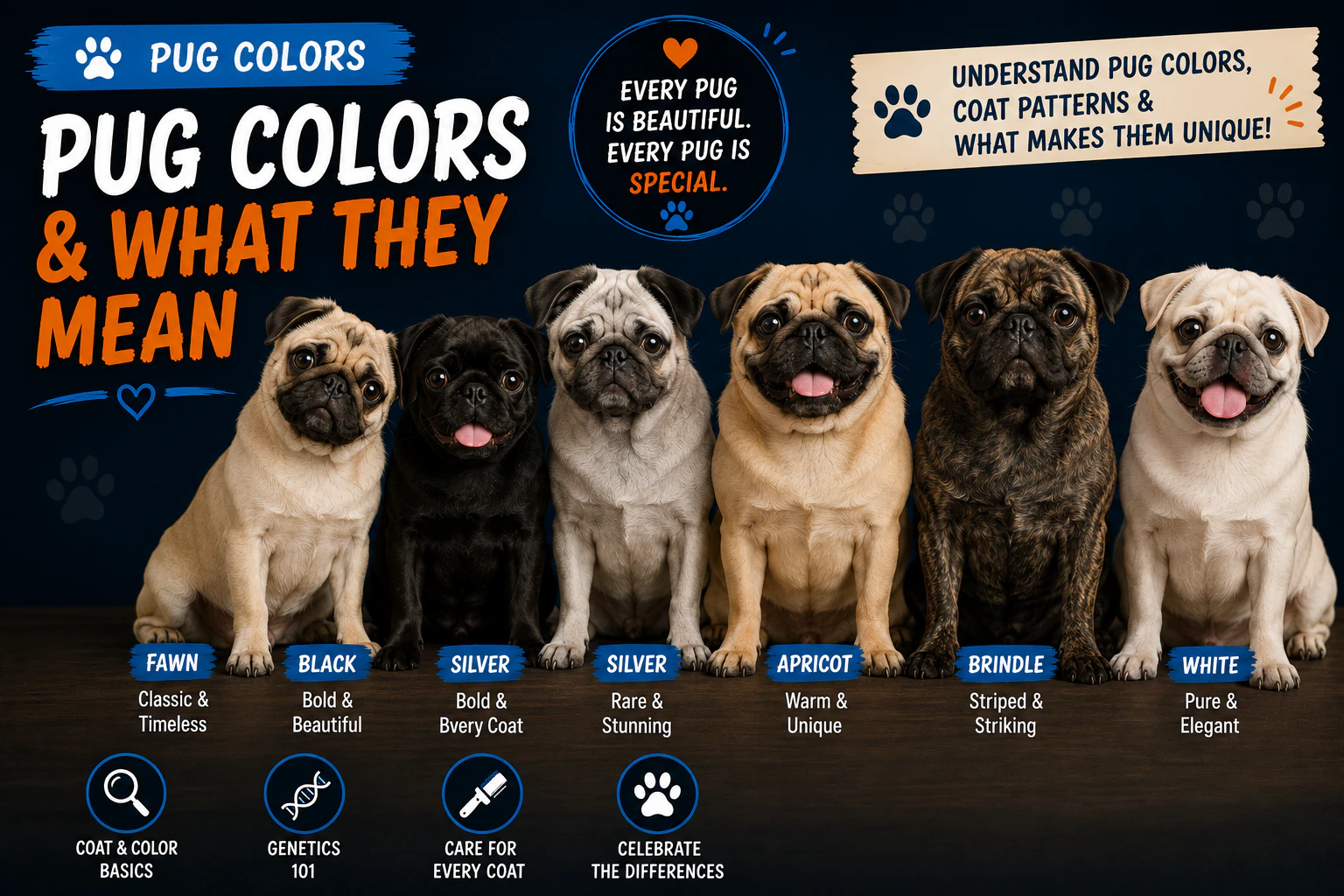
Pug coats are easy to admire and surprisingly easy to over-interpret. Color terminology varies across breed standards, registries, and marketing. This article uses the AKC/Pug Dog Club of America standard as one reference point and treats the supplied artwork as illustrative, not a factual color chart or source of genetic or personality claims.
Understanding Pug Coat Colors
Coat color is produced by inherited pigment patterns, then described through the language used by breeders, registries, and breed standards. Those systems do not always use the same terms.
A color name can be descriptive without saying anything about a dog's temperament, health, or value as a companion.
The Classic Fawn Pug
Under the AKC Pug standard, fawn is one recognized color. The Pug Dog Club of America notes that fawn can range from cream to rich apricot and shades between.
Fawn pugs are often recognized by contrast with the black mask and trace, but individual shading varies.
Black Pugs
Black is the other color recognized by the AKC Pug standard. A black pug can show natural differences in sheen or shade without changing the basic color category.
Color is a visual trait, not a personality assignment. A black pug needs the same thoughtful care, training, and veterinary support as any other pug.
Silver and Apricot Terminology
Silver and apricot are terms often used to describe shades within the fawn range. The exact usage can vary, so ask a knowledgeable breed source or registry what a term means in its particular context.
A label alone should never replace records, responsible breeding information, or a conversation about a dog's individual needs.
Other Colors and Patterns You May Encounter
Online listings and social media may use terms such as brindle, white, blue, or parti-color. These labels may describe what someone sees, but they are not automatically recognized by every breed standard or kennel club.
The artwork includes several illustrative coats. It is not a claim that every pictured color or pattern is standard-recognized.
Recognized Colors vs. Non-Standard Colors
The AKC standard lists fawn and black for pugs and disqualifies other colors in that conformation-show context. Other registries or groups may use different language or rules.
A non-standard label is not a shortcut to judging a dog's worth, health, or suitability as a beloved companion. It simply needs to be described accurately.
The Pug's Black Mask and Other Markings
The AKC/PDCA standard describes a black mask and dark markings including the ears, cheek moles, forehead thumb mark or diamond, and back trace for fawn pugs.
How clearly those markings appear can vary. A standard is a show-breeding description, not a measure of how much a family should love a dog.
The Trace and Thumbmark
The trace is a dark line extending along the back, while the thumbmark or diamond refers to a dark marking on the forehead in the standard's terminology.
These are descriptive terms used in breed discussion. They do not predict behavior, health, or personality.
The Basics of Coat-Color Genetics
Genes influence pigment and pattern, but coat-color genetics can be complex. A DNA result or color claim should be interpreted in context by a qualified professional familiar with the breed.
Avoid making breeding or health decisions from a simplified online color chart alone.
Does Coat Color Affect Personality?
There is no sound basis for assigning a pug's personality or temperament from coat color. Socialization, training, health, prior experience, and the individual dog matter far more.
The playful descriptions inside the artwork are creative language, not behavioral classifications.
Does Color Determine Health?
Color by itself does not automatically make a pug healthier or less healthy. Health depends on many factors, including genetics beyond coat color, breeding practices, environment, preventive care, and the individual dog.
Discuss specific health concerns with a veterinarian and, when relevant, seek transparent health information from a responsible breeder or rescue.
Grooming Different Pug Coats
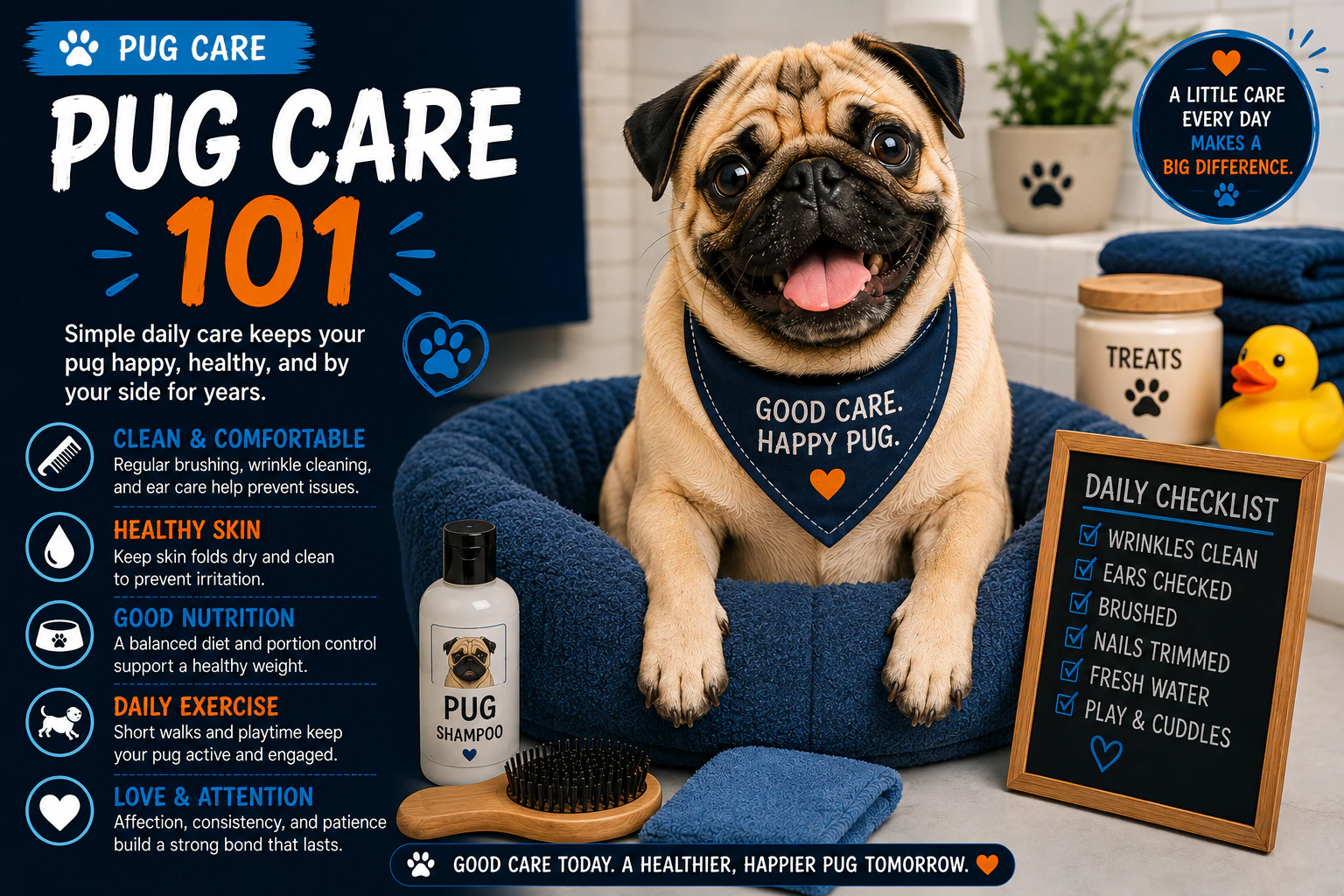
Pug coats are generally short, smooth, and regular brushing can help manage loose hair. Grooming needs are guided more by coat condition, skin, folds, ears, and the individual dog than by a color label.
New itching, irritation, hair loss, or skin changes should be discussed with a veterinarian.
Choosing a Pug for More Than Color
A wonderful match is about health, temperament, history, care needs, and whether a home can provide lifelong support. Color can be a preference, but it should not be the deciding factor.
Whether adopting or working with a breeder, ask practical questions about health testing, early care, socialization, records, and long-term support.
Professor Pug's Quick Lesson
Professor Pug's quick lesson: every coat is worth admiring, but the real story is the whole dog in front of you.
Related Learning Center Lessons
Keep learning with Professor Pug.

Explore everyday life with pugs in Pug Corner.
Back to the Learning CenterHelpful veterinary resources
This article is educational and is not a substitute for veterinary care.