
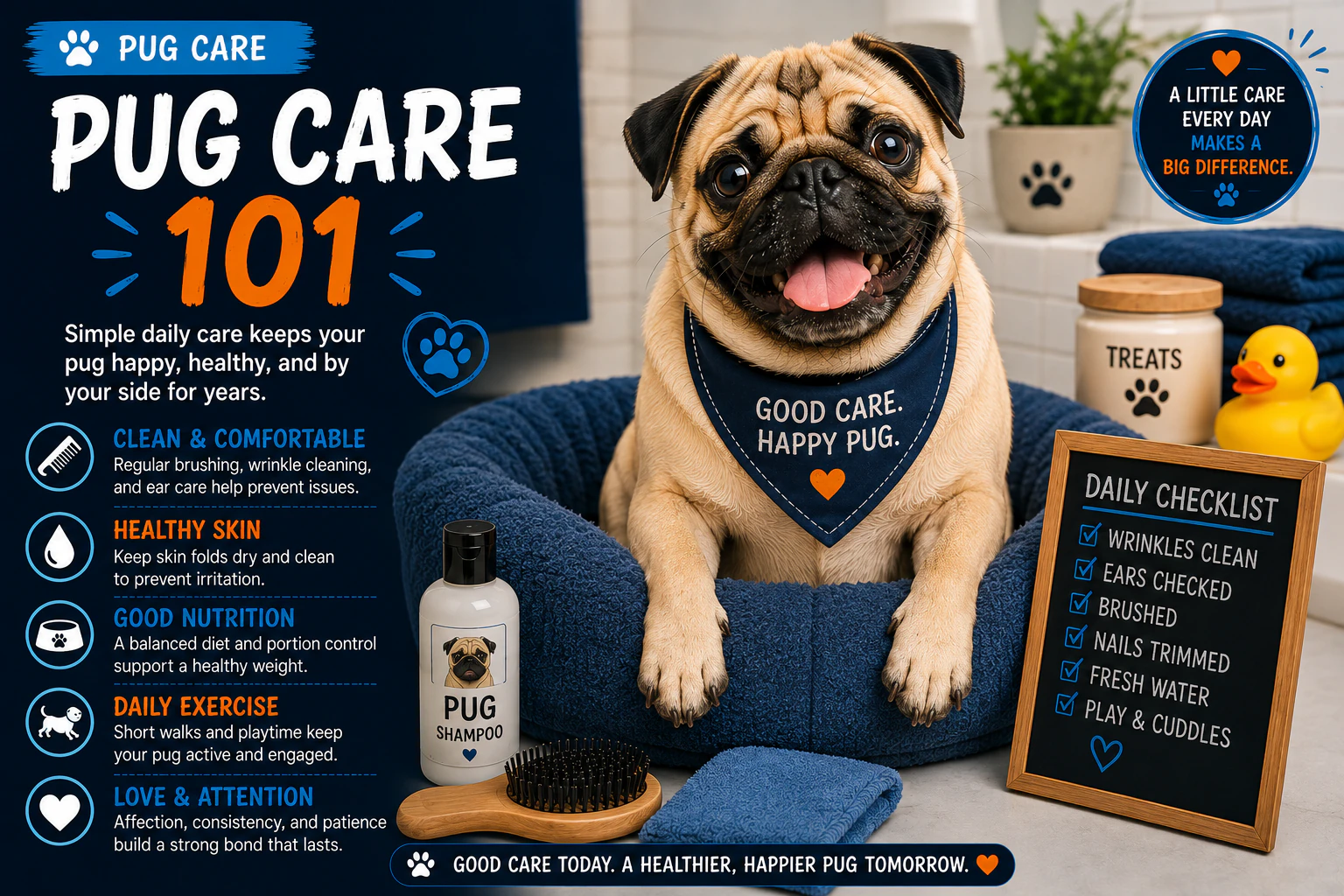
Those expressive folds are part of the pug look, and they deserve regular, gentle attention. Skin pressed together can stay warm and damp, creating conditions where irritation or infection may develop. This is general education, not a treatment plan: ask your veterinarian to show you what is appropriate for your dog, especially around the eyes and nose.
Why Facial Folds Need Attention
The skin inside a fold touches itself, so warmth, moisture, skin oils, and debris can collect there. Veterinary references describe facial folds as a common site for skin-fold irritation and infection in breeds such as pugs.
A fold that looks a little different from another pug’s fold is not automatically a problem. Your dog’s normal skin, comfort, and veterinary history are the useful reference points.
Make Checks Calm and Routine
Choose a quiet moment and gently look at the folds your veterinarian has asked you to monitor. Keep handling brief and positive, and stop if your dog seems uncomfortable.
A regular check helps you notice changes early. Ask your veterinary team how often to clean your dog’s folds; needs vary with the individual dog, skin, and environment.
Keep Care Gentle
Use only a cleaning method and product your veterinarian recommends for your pug. The skin near the nose and eyes is delicate, and products made for people or for other parts of the body may not be suitable.
If your veterinarian recommends wiping, use a soft, clean material and gentle movements. Do not scrub, pull at crusts, or push anything into the nostrils or eyes. Ask for a demonstration if you are unsure.
Dry the Fold Carefully
If a fold becomes damp during veterinarian-approved cleaning, gently pat it dry with a clean, soft cloth. A persistently damp fold can be uncomfortable and may favor skin problems.
Avoid vigorous rubbing or trying to dry the area with heat. If the fold stays moist, smells unusual, or is hard to care for comfortably, ask your veterinarian for advice.
Watch for Changes
Redness, swelling, tenderness, persistent odor, discharge, damp or matted hair, repeated rubbing, pawing, or a sudden increase in scratching can signal irritation or another skin problem.
A veterinarian can examine the area and determine whether allergies, infection, parasites, or another cause needs attention. A change in the skin is not something to diagnose from a photo or treat with leftover medication.
When to Contact Your Veterinarian
Contact your veterinary clinic if the skin looks sore, is repeatedly wet or smelly, or your pug seems itchy or painful. Seek prompt advice for worsening symptoms, discharge, bleeding, or swelling near the eye or nose.
Do not wait for a routine visit if your dog is very uncomfortable or the problem is getting worse. Your veterinarian can recommend a safe care plan and check for causes beyond the fold itself.
Build a Positive Care Habit
Pair calm handling with praise and a small reward if appropriate for your dog. Short, low-pressure sessions are easier than trying to clean a worried dog all at once.
If your pug resists, cries, or pulls away, pause. Discomfort can have a medical cause, and forcing the area may make future care harder. Ask your veterinarian or a qualified reward-based trainer for help with cooperative handling.
A Simple Fold-Care Checklist
Follow your veterinarian’s instructions; check the folds they identify; use only recommended products; keep handling gentle; pat damp skin dry when advised; and note changes in comfort, smell, color, or moisture.
The right routine is the one tailored to your pug. Some dogs need more help than others, and your veterinarian can adjust the plan as your dog’s skin changes.
Professor Pug's Quick Lesson
Professor Pug’s quick lesson: admire the wrinkles, check them gently, and let your veterinarian guide the care routine that fits your individual pug.
Related Learning Center Lessons
Keep learning with Professor Pug.

Explore everyday life with pugs in Pug Corner.
Back to the Learning CenterHelpful veterinary resources
This article is educational and is not a substitute for veterinary care.