
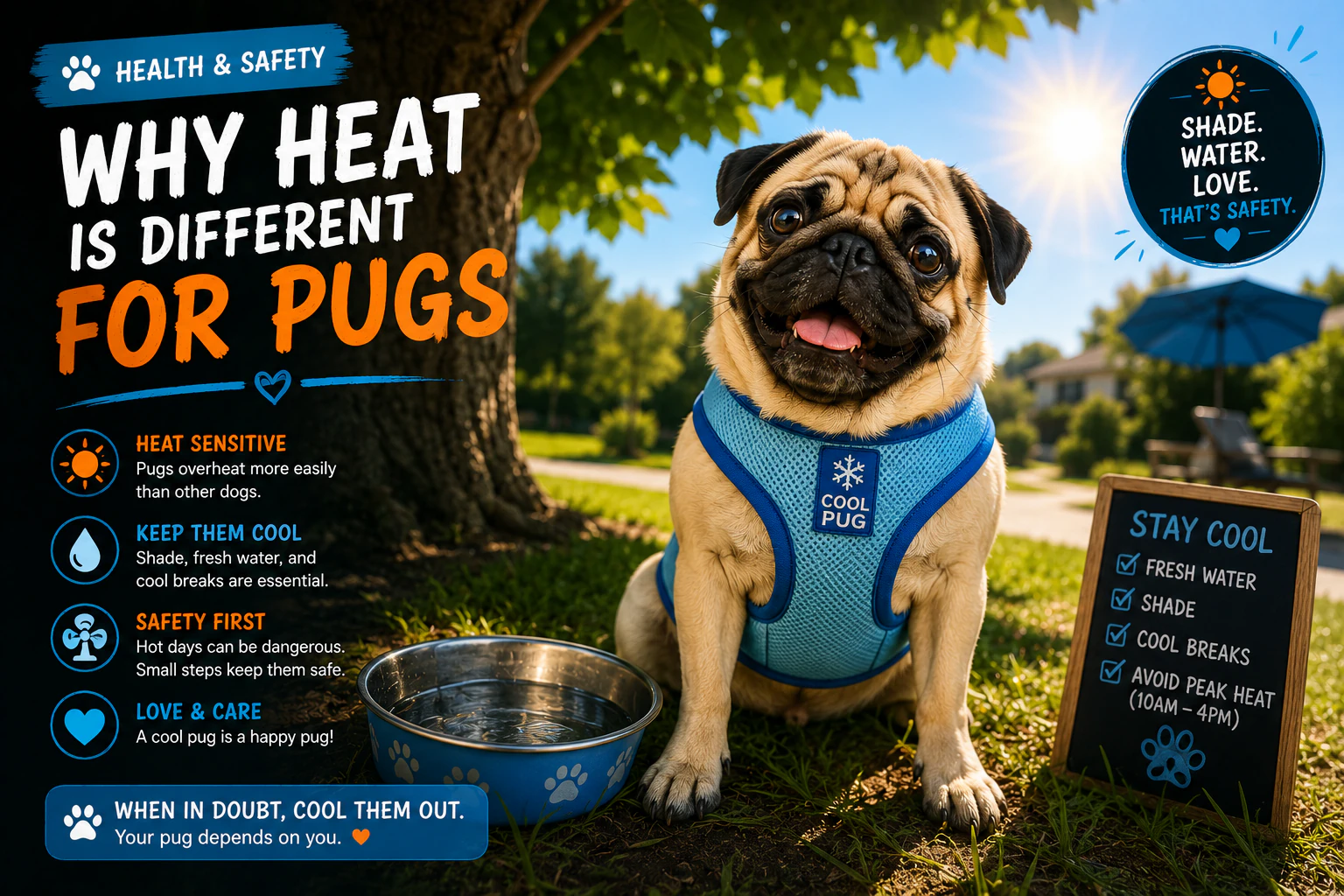
Pugs can become overheated more quickly than many dogs because their short muzzle and airway anatomy can make it harder to cool themselves through panting. This guide is educational, not veterinary diagnosis or treatment advice. Heat distress can become an emergency, so contact a veterinarian or emergency veterinary service whenever you are concerned about your dog's condition.
Why Pugs Handle Heat Differently
Pugs are brachycephalic, or short-muzzled, dogs. Their airway structure can make heat, humidity, excitement, and exertion harder to manage.
A warm day that feels manageable to a person may be too demanding for an individual pug. Age, fitness, health, weight, and the weather all matter.
How Pugs Cool Themselves
Dogs rely heavily on panting to release heat. When breathing is less efficient, cooling can be harder too.
This is why a pug needs calm pacing, cool breaks, water, and careful observation rather than a one-size-fits-all activity plan.
Why Short Muzzles Matter
A short muzzle is more than a different profile. Narrow nostrils, soft-tissue differences, and other airway features can increase resistance to airflow.
Ask a veterinarian about your pug's normal breathing and any change you notice. Noisy breathing should not automatically be dismissed as normal for the breed.
Warning Signs of Overheating
Heavy panting, excessive drooling, vomiting, weakness, confusion, or collapse can be signs of heat distress. Stop activity, move your dog to a cooler place, and contact a veterinarian or emergency veterinary service immediately if you are concerned.
Breathing distress, blue or pale gums or tongue, or collapse should be treated as emergencies.
Shade, Water, and Cool Breaks
Shade, fresh water, and calm rest breaks are simple safeguards. Do not wait for a pug to look distressed before offering a pause.
A shaded spot is not always cool enough on a humid or very hot day, so continue to watch comfort and breathing.
Choosing Safer Times for Walks
Choose cooler times of day and shorten plans when temperatures or humidity rise. Let your pug's comfort and recovery guide the outing.
When conditions are not suitable, low-key indoor enrichment can be a kinder substitute than pushing through a walk.
Hot Pavement and Outdoor Surfaces
Pavement, sand, decks, and other surfaces can hold heat. Check conditions before heading out and choose a cooler route or stay indoors when needed.
Keep outdoor trips purposeful and brief in warm weather rather than treating a normal routine as mandatory.
Indoor Cooling and Airflow
A cool, calm indoor environment gives a pug a chance to rest after activity. Fresh water and a comfortable place to settle are helpful parts of a warm-weather routine.
If a pug is not recovering comfortably, treat that as a reason to seek veterinary advice rather than simply adding another fan or more water.
When to Stop Activity
Stop when your pug is struggling, seems unusually tired, has noisy or labored breathing, or is not recovering as expected. Heat safety is about early decisions, not waiting for a crisis.
Talk with a veterinarian about what activity level is appropriate for your individual dog.
When to Contact a Veterinarian
Contact a veterinarian for new or worsening breathing changes, exercise intolerance, or any concern about your pug's response to heat. Heat distress can worsen quickly.
If there is marked distress, collapse, altered awareness, or trouble breathing, seek emergency veterinary care immediately.
Professor Pug's Quick Lesson
Professor Pug's quick lesson: when in doubt, cool them out. A shorter, calmer day is always better than a dangerous one.
Related Learning Center Lessons
Keep learning with Professor Pug.

Explore everyday life with pugs in Pug Corner.
Back to the Learning CenterHelpful veterinary resources
This article is educational and is not a substitute for veterinary care.