
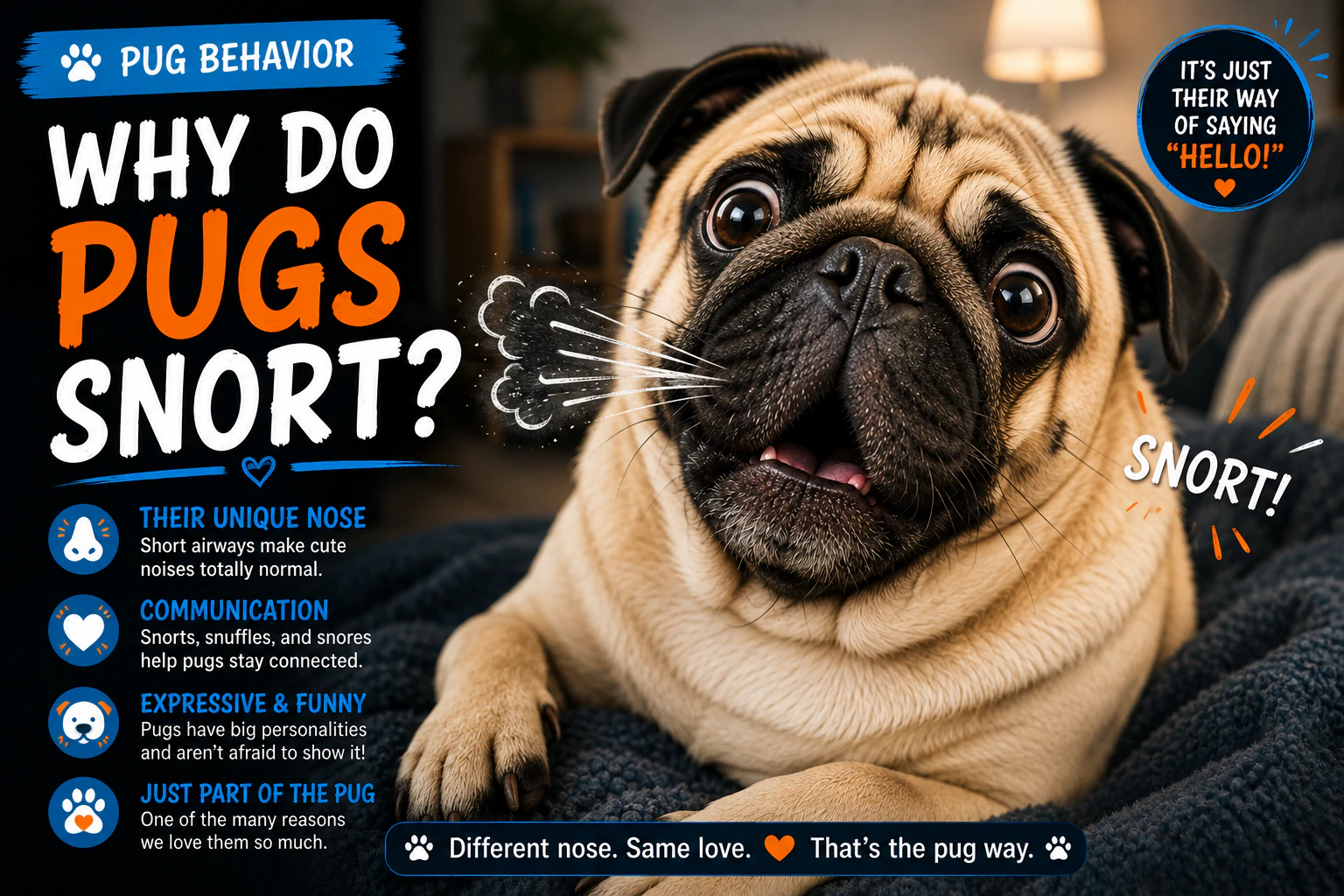
A pug can turn a quiet room into a tiny sound studio: snorts, snuffles, snores, and delighted little grumbles all come with the territory. Those sounds are part of what makes pugs memorable, but their short facial structure also means noisy breathing deserves thoughtful attention rather than a blanket assumption that it is always normal.
Why Pugs Make So Many Noises
Pugs are brachycephalic dogs, meaning they have a short muzzle and a compact upper airway. In that smaller space, air has to move around the same kinds of structures found in longer-nosed dogs, so airflow can be noisier.
Every pug is an individual. Some make occasional sounds while resting, playing, or waking up; others may have more significant airway limitations that deserve a veterinarian's assessment.
How Their Short Muzzle Affects Breathing Sounds
A short nose is not simply a smaller version of a long nose. Narrow nostrils, a longer soft palate, and a relatively narrow windpipe can all contribute to resistance as air moves through the airway.
That is why veterinary teams pay close attention to breathing comfort in pugs, especially during heat, exercise, excitement, or stress. A routine veterinary exam is the right place to discuss your dog's usual breathing and any changes you notice.
Snorting vs. Snoring vs. Snuffling
These words describe sounds, not diagnoses. A snort can happen as air moves forcefully through the nose or mouth. Snoring often happens during sleep. Snuffling can sound like a series of quick nasal breaths.
A useful habit is to notice the context: Did the sound start suddenly? Is it new, getting louder, happening at rest, or paired with coughing, gagging, or reduced interest in activity? Those details help a veterinarian decide what comes next.
Why Excitement Can Make Pugs Noisier
A happy greeting, a favorite toy, warm weather, or a fast game can all increase a pug's breathing effort. More panting and more noise in those moments can be a cue to pause the activity, offer a cool calm space, and let your pug recover.
Keeping a healthy weight, using a harness instead of neck pressure, and avoiding excessive heat and humidity are practical comfort measures commonly recommended for short-nosed dogs.
Reverse Sneezing
A reverse-sneezing episode can sound dramatic: a dog may stand still, extend the head and neck, and make rapid, forceful inhaling sounds for several seconds. A dog may be completely normal before and after an isolated episode.
Still, a video of the episode and a conversation with your veterinarian are useful, especially if episodes are frequent, prolonged, changing, or paired with other breathing or nasal signs. Similar sounds can have different causes.
What Is Usually Normal
An occasional brief sound in an otherwise comfortable pug who returns quickly to normal may be familiar to many families. But normal is not a one-size-fits-all label, and frequent loud breathing should not be dismissed simply because a dog is a pug.
Your veterinarian knows your dog's baseline and can help you tell the difference between a familiar quirk and a change worth investigating.
When Breathing Sounds May Need Veterinary Attention
Contact your veterinarian promptly for a new or worsening breathing pattern, trouble exercising, repeated gagging, open-mouth breathing at rest, persistent cough, nasal discharge, or changes that concern you.
Difficulty breathing, marked distress, blue or pale gums or tongue, weakness, collapse, or a breathing crisis are emergencies. Keep your pug calm and cool and seek immediate emergency veterinary care rather than waiting to see whether the sounds pass.
Helping Your Pug Stay Comfortable
Build in cool-down breaks, choose calmer play during hot or humid weather, and watch how your pug recovers after activity. A harness can avoid extra pressure around the neck, and a healthy body condition can support easier breathing.
Most importantly, share recordings and observations with your veterinarian. Small notes about when noises happen can be surprisingly helpful in a clinical conversation.
Professor Pug's Quick Lesson
Professor Pug's quick lesson: adore the snort, but listen for change. A comfortable pug should be able to rest, play within their limits, and recover without struggling for air. When in doubt, ask your veterinarian.
Related Learning Center Lessons
Keep learning with Professor Pug.



Explore why pugs snore in Pug Corner.
Back to the Learning CenterHelpful veterinary resources
This article is educational and is not a substitute for veterinary care.